

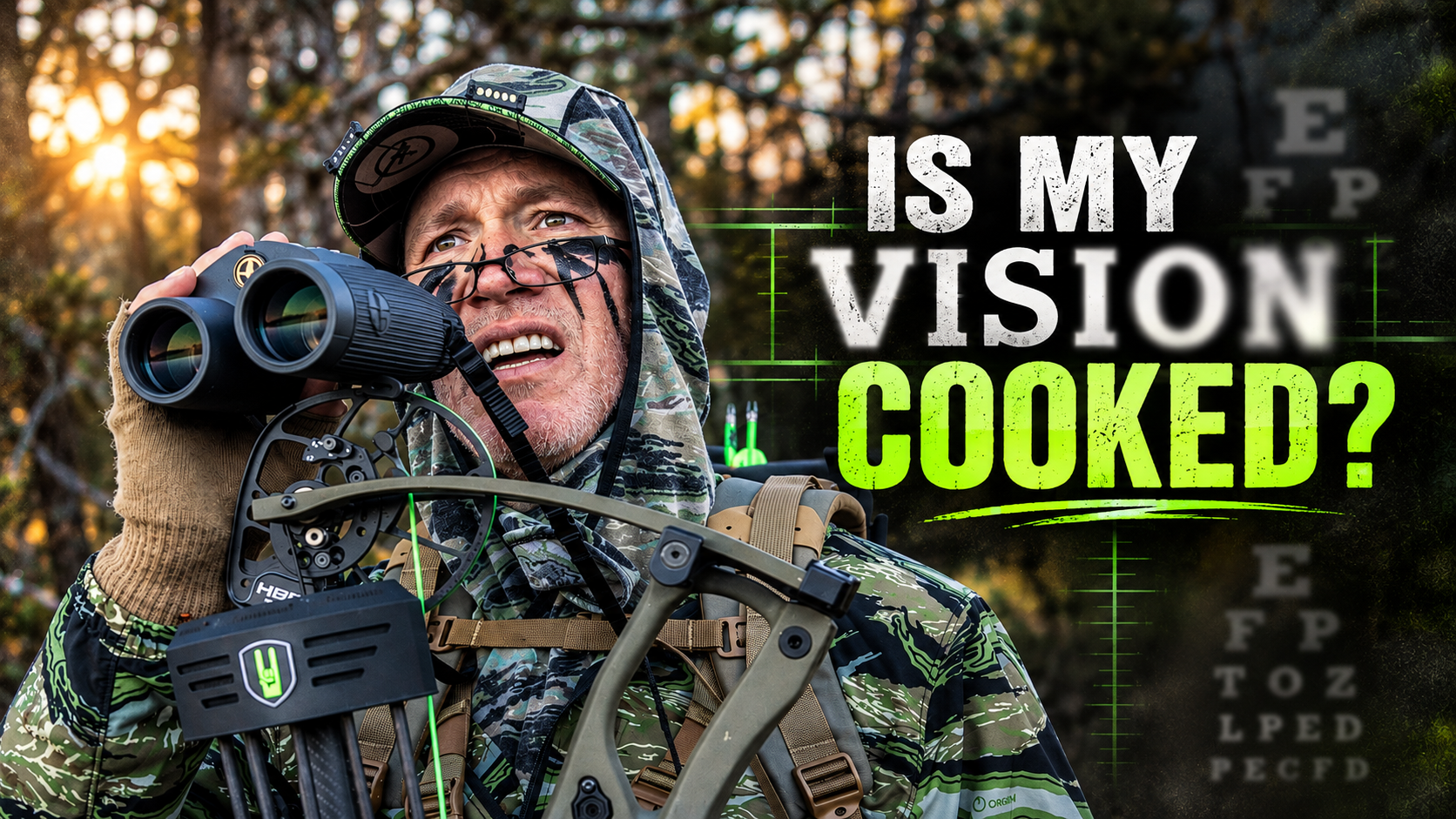
I’ll never forget the moment I was glassing a hillside for elk, looked down at my phone to check the time, and realized I couldn’t see a damn thing on the screen.
That was my wake-up call. Age was catching up to my eyes.
Later, I drew back my bow and my sight pin turned into a fuzzy blob. Anyone who’s crossed the 40-year threshold knows what I’m talking about: Your arms suddenly aren’t long enough to read anything, and your archery accuracy takes a hit.
But you don’t have to surrender to reading glasses yet. I learned a simple technique that’s helped me preserve my close vision and maintain pinpoint accuracy, even as my eyes age. It costs nothing, takes just minutes, and might help you make the perfect shot.
The Sunrise Solution: Nature’s Vision Therapy
I was on an elk hunt with surfer Laird Hamilton when he noticed me struggling with my cheaters. As I fumbled to get them on so I could see my bow sight, he asked how long I’d been dealing with vision issues.

“It just started,” I told him. “But the more I wear these glasses, the worse it seems to get and the more I depend on the glasses.”
“It will,” he said. “Here’s what you need to do.”
Laird, who spends countless dawn hours watching waves while surfing, recommended practicing with the sunrise, using it as a focal point to train my eyes to transition between different distances.
Here’s the technique:
- Set up your practice location where you can clearly see the sunrise on the horizon
- While practicing, deliberately shift your focus between three points:
- The horizon near the distant sunrise
- Your bow sight (close vision)
- Your target downrange (mid-range vision)
- Repeat this pattern throughout your morning practice session
By continuously exercising your eyes’ focusing muscles, you train them to adjust more quickly and maintain their flexibility, like how we train our archery muscles through repetition.
The Science Behind the Sunrise Hack
As we age, our eyes’ lenses become less flexible, making it harder to quickly shift focus between different distances. This condition, known as presbyopia, typically begins to affect people in their 40s.

The sunrise technique gives your eye muscles a workout. Practicing these focus transitions trains the ciliary muscles that control your eye’s lens, helping maintain their strength and responsiveness.
Relying on natural light at sunrise is also beneficial because:
- The gradual increase in light helps your pupils adjust naturally
- The distance to the horizon is a perfect far-focus point
- The warm, direct light makes your sight pin more visible
- The natural environment engages your brain’s focusing systems more effectively than artificial settings
When I incorporate this into my routine, I notice improvements. On mornings when I practice with the sunrise, my pin clarity is better than on days when I don’t. Do not stare directly into the sun, as the ultraviolet light it emits can cause damage regardless of how dim it appears.
Integrating the Technique Into Your Practice Routine
I’ve restructured my practice setup to take advantage of this technique. My backyard range now faces North/South, so as I’m in my archery stance, I’m facing east, allowing me to use the sunrise as part of my daily training.

Here’s how I integrate it into my morning routine:
- I head out with my second cup of coffee right around dawn
- Between shots, I look toward the horizon and let my eyes fully focus on the sunrise
- Then I draw my bow and focus on my sight pin (the close vision that’s typically problematic)
- I shift focus to my target, aiming at specific scoring rings
- After the shot, I repeat the process
Consistency is key here. Making this a daily practice has allowed me to postpone relying on cheaters. Now, I can clearly see my 31mm sight housing and pins without glasses, which wasn’t possible before.
Real-World Benefits for Hunters
This technique doesn’t just benefit target practice. It helps in hunting situations, too.
Think about what happens in a treestand at first light: You’re constantly scanning between distant terrain and closer objects, checking your rangefinder, looking at your bow sight, then back to that buck stepping into the clearing.
On mornings in the field where I watch the sunrise and actively practice these focus shifts, my vision stays sharper throughout the hunt. I’m more present, more aware, and more prepared when that shot opportunity presents itself.
When I’m in my treestand watching that sunrise, searching for deer in the first light, my eyes are already warmed up and ready to make those important focus transitions.

The Bigger Picture: Preserving What Matters
This vision hack will help you take control of the aging process and find simple, natural ways to preserve the abilities that matter most.

At nearly 3,000 practice arrows this season (and counting!), I’m more committed than ever to maintaining every advantage I can. Vision is perhaps the most important element of accurate archery, and this sunrise technique has become as important to my practice as proper form and consistent release.
If you’re starting to notice those first frustrating signs of close vision loss, don’t just reach for the cheaters. Give this technique a try for a few weeks. Head out at sunrise, make those focus shifts part of your routine, and you might find yourself seeing clearly again.