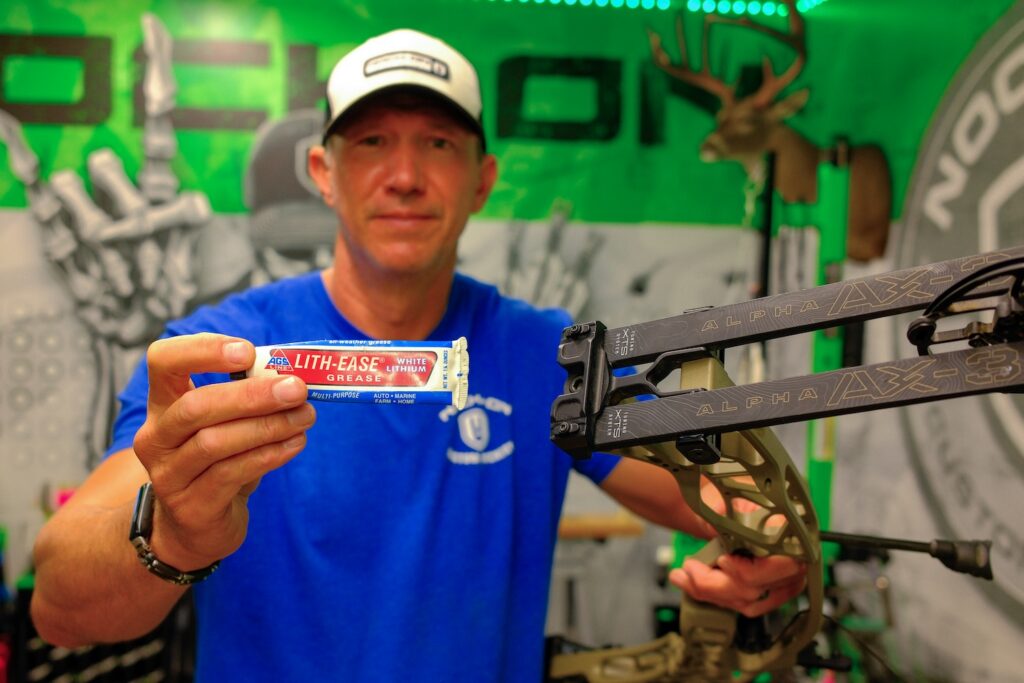

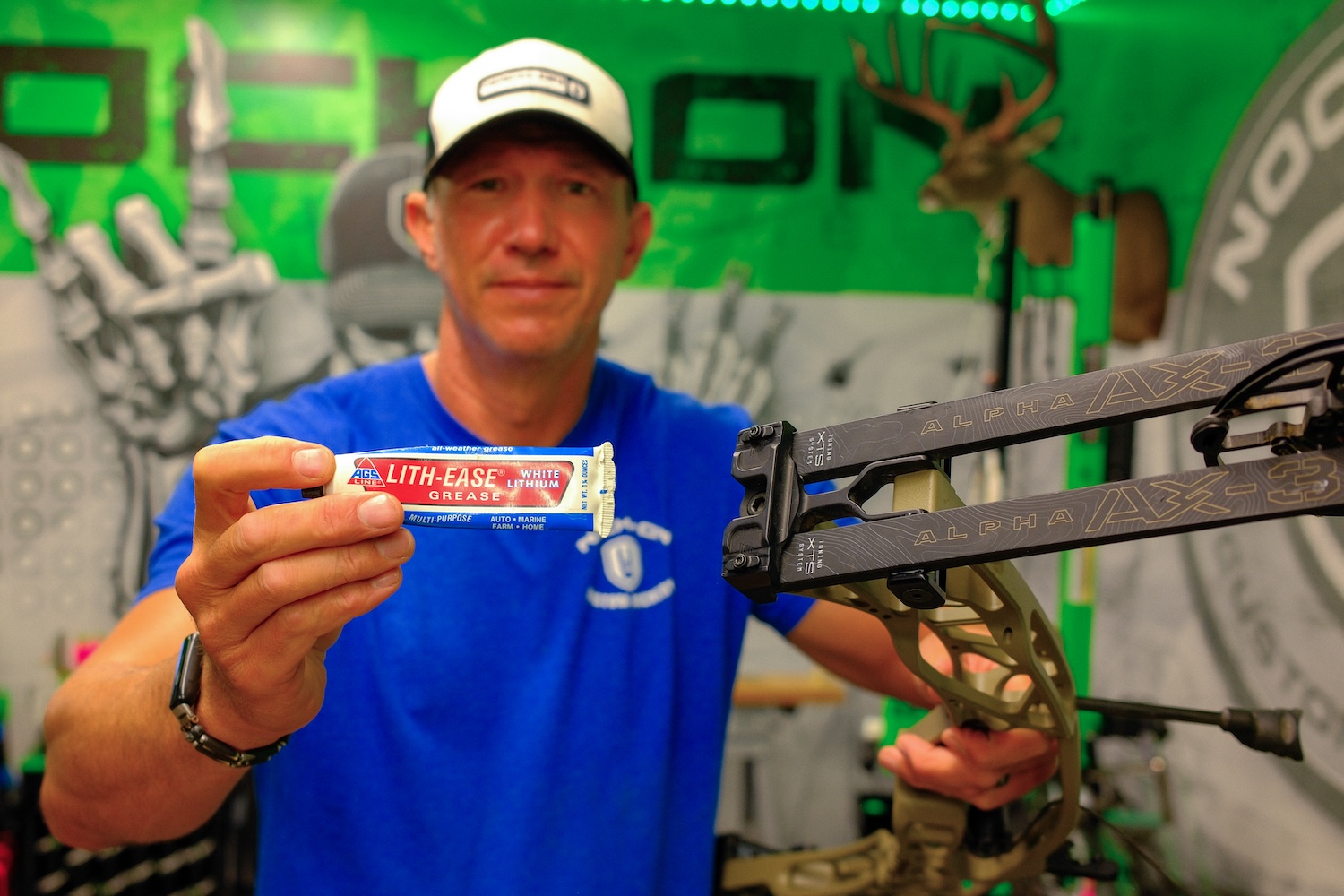
Eliminating those mysterious little clicks and creaks from your bow ensures nothing alerts that trophy buck when you’re at full draw.
After countless hours in the field and at the workbench, I’ve found that some of the most frustrating bow noises come from the simplest oversight: proper limb pocket lubrication.
This is a little more of an advanced project for all you DIY archers who already have some experience with a bow and press. So buckle in for getting a little more greasy.
When I’m working on a bow, whether I’m adjusting cam spacers, replacing strings, or doing a complete teardown, I always take advantage of the disassembly to hit a few important spots with lithium grease. This small step pays huge dividends in the field, separating serious bowhunters from casual shooters.
The Often-Overlooked Maintenance Opportunity
Most archers understand the importance of tuning their bow. You’ve probably spent hours tweaking cam timing, adjusting draw length, and paper tuning to get bullet holes. But how much attention have you given to the mechanical interfaces where your limbs meet the riser?
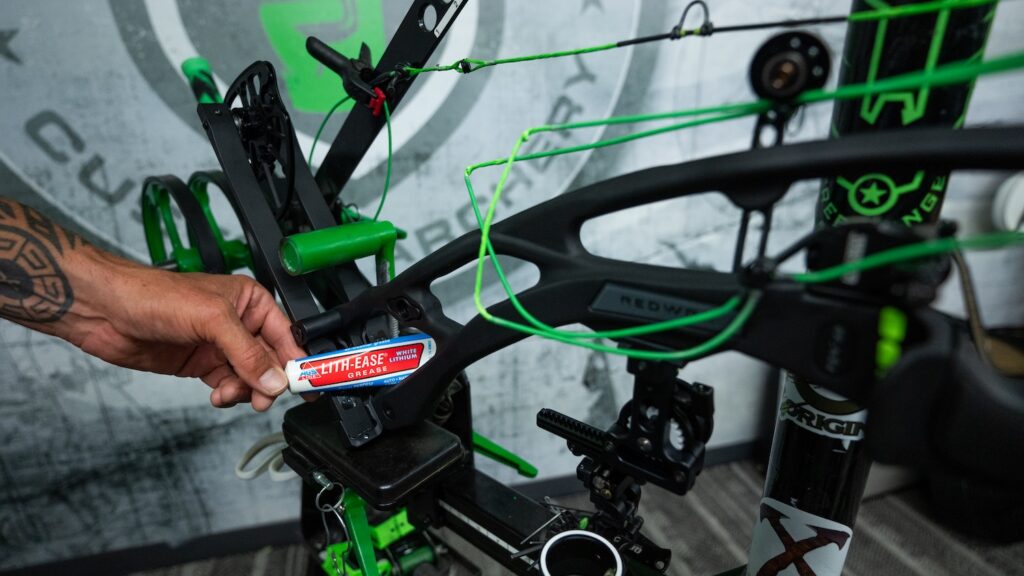
When I adjust my cam spacers on my bow, I essentially fine-tune how the cam sits between the limbs. This somewhat advanced tuning step requires removing components. Since I’ve already gone through the trouble of disassembly, I use this opportunity to apply lithium grease to key contact points.
“But don’t manufacturers already grease these parts?” you might ask.
Most bow companies apply some lubricant during assembly, but the quality control varies. Some factory technicians are stingy with their lithium grease application; others do a more thorough job.
Rather than leaving it to chance, I take matters into my own hands. This preventative maintenance costs nothing but adds a ton of value.
The Contact Points You Need to Grease
When your bow is under the tension of a full draw, components rub against each other at several points, creating unwanted noise.
Here are the areas I focus on:
The Rocker Pads: These are the surfaces inside the limb pocket where the limb actually sits. I apply a small dab of lithium grease right where the limb makes contact with these pads.
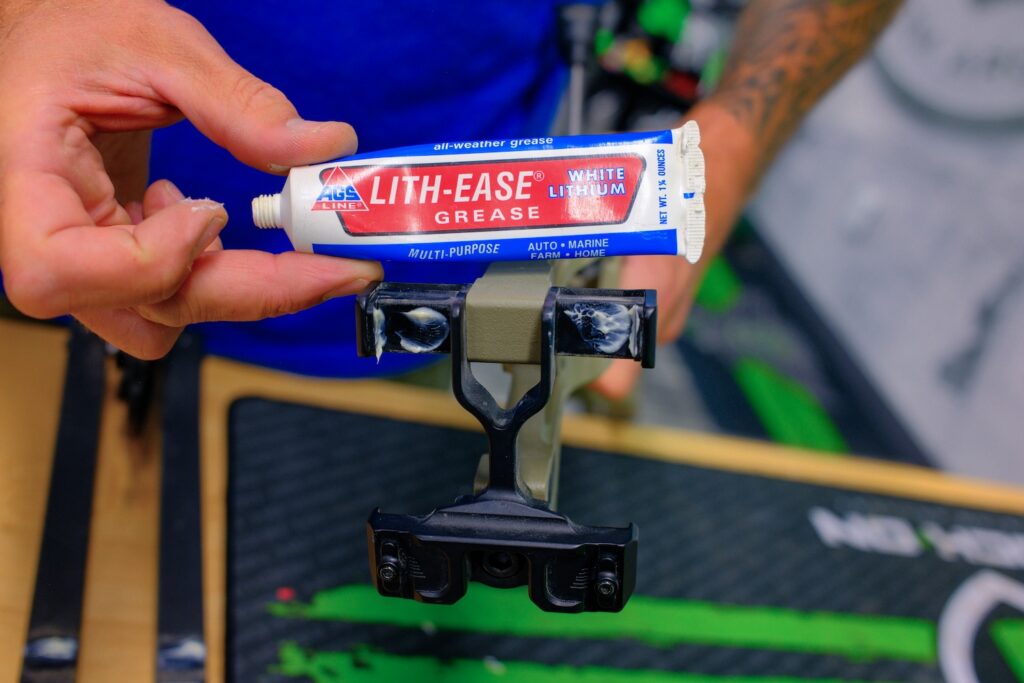
The Inner Pocket Walls: I also hit the pocket’s inside walls where the limb might contact during flexing.
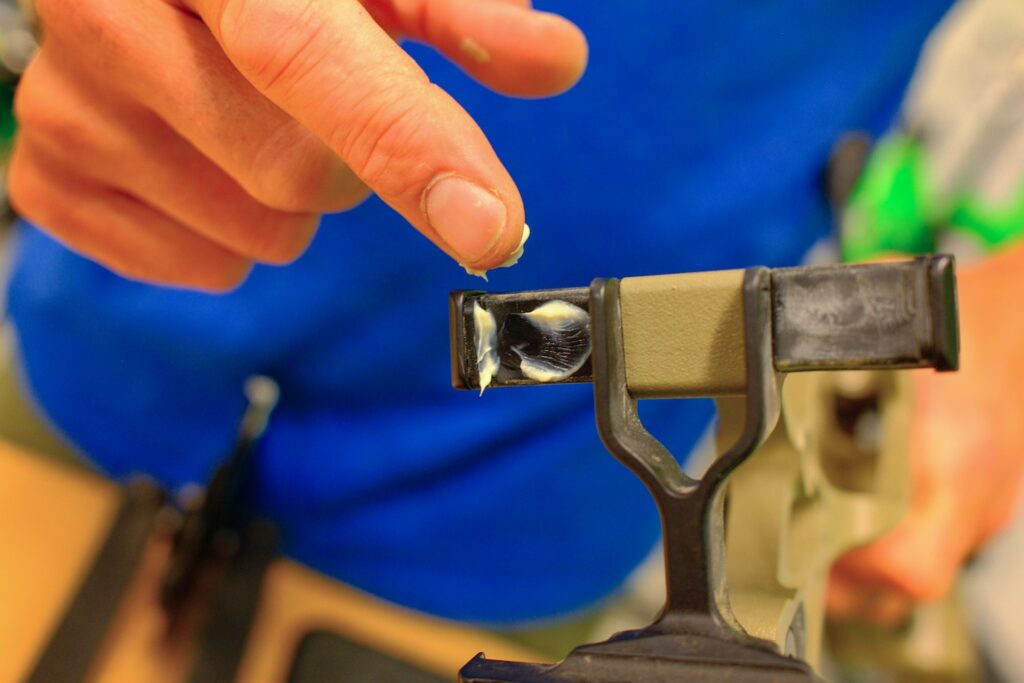
The Front Pocket Stop: Perhaps most importantly, I apply grease where the limb contacts the front of the pocket. This is often the cause of those little clicks you can’t determine the origin of.
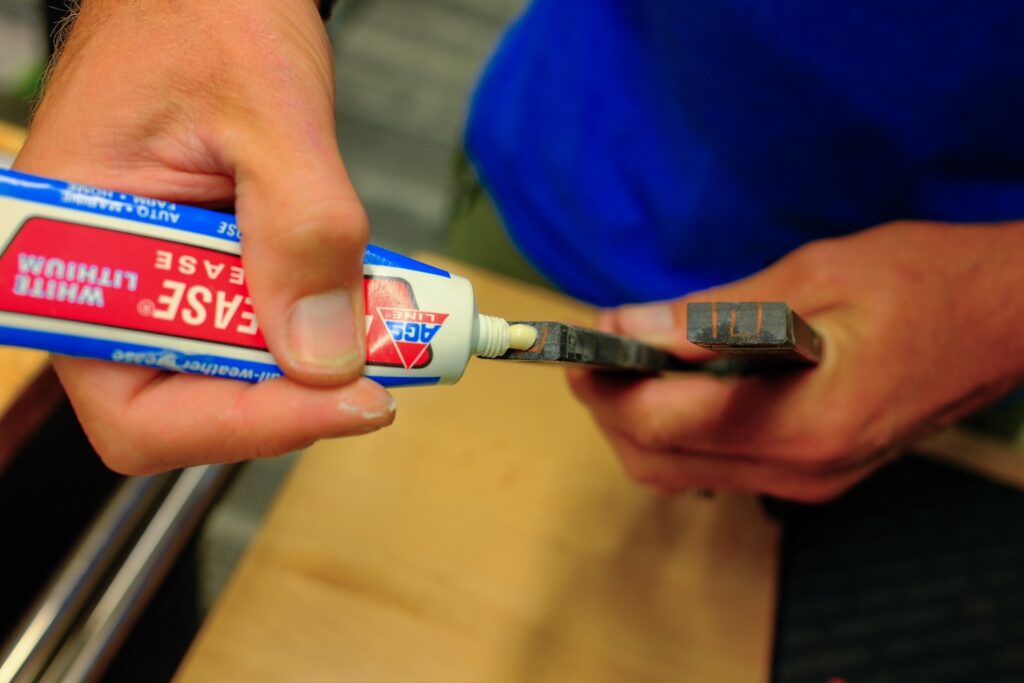
When a limb flexes under load, these contact points experience a ton of pressure and movement. If the paint is particularly thick or there’s any roughness at these interfaces, you’ll get friction, and friction creates noise.
A properly lubricated limb pocket eliminates this game-alerting sound.
The Right Tools and Techniques
You don’t need much to perform this maintenance. A small tube of lithium grease lasts years. I’ve been using the same tube since my first bow shop, and just a dab will do you.
The application process is straightforward:
- Remove the strings and cables to access the limb pockets properly.
- Apply a small amount of lithium grease to each contact point.
- Work the limbs a bit to distribute the grease evenly.
- Reassemble your bow.
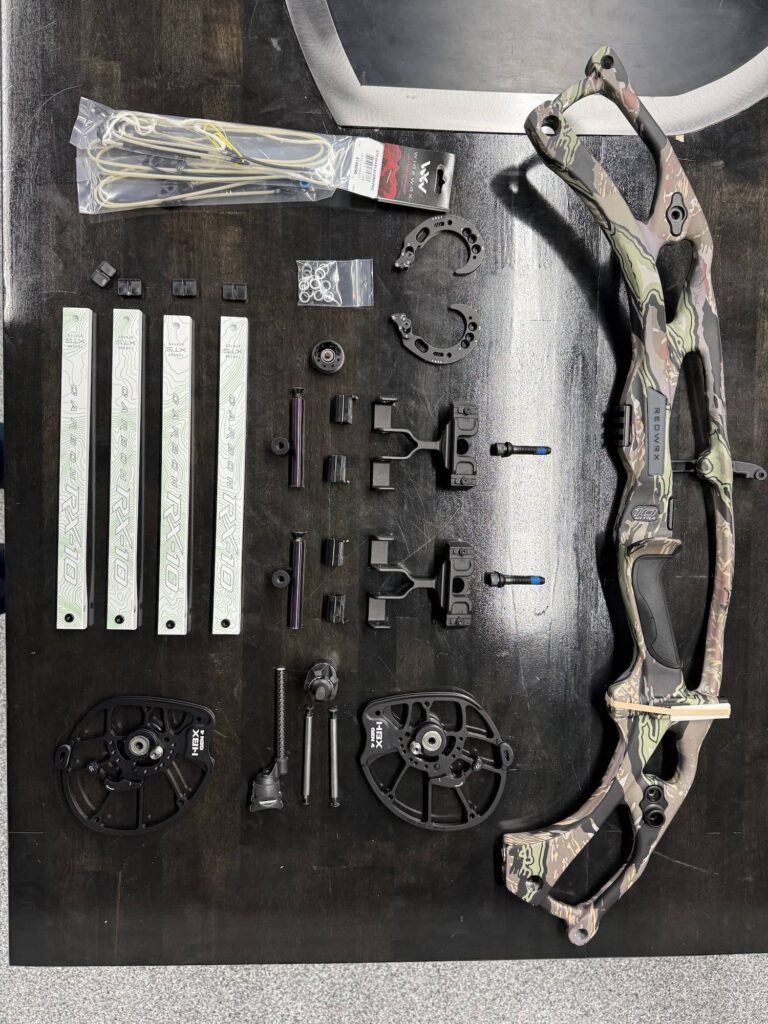
This is particularly important if you’re an at-home bow mechanic who regularly works on your own equipment. When you’re already going through the process of removing the cam system for tuning, taking this extra step is a no-brainer.
Proper lubrication doesn’t just eliminate squeaks. It also reduces premature wear on your equipment. It’s especially valuable for bowhunters who expose their gear to different weather conditions, from summer heat to late-season cold.
Why This Matters in the Field

Seemingly minor equipment issues have cost me too many opportunities.
When that mature buck is standing broadside at 30 yards, the last thing you want is a random click as you reach full draw. Game animals don’t hang around to determine whether that sound was your bow or a twig snapping.
A properly maintained bow also performs more consistently. Every serious archer knows consistency is the foundation of accuracy, and eliminating variables (even small ones like pocket friction) contributes to that consistency.
This maintenance step is particularly important if you:
- Hunt in cold weather when lubricants thicken
- Use your bow in dusty or sandy environments
- Shoot high arrow volumes that increase wear on components
- Notice any unexplained noises during your draw cycle
Small Details, Big Results
Bowhunting success often comes down to attention to detail. While we spend countless hours practicing our shooting form, scouting locations, and selecting the right equipment, it’s easy to overlook simple maintenance steps that can make or break a hunt.
The next time you have your bow partially disassembled for tuning or maintenance, take the extra minute to apply lithium grease to your limb pockets. It’s a small time investment that pays off with a quieter, smoother-functioning bow when it matters most.