
Most hunters show up on opening morning hoping everything falls into place. They’re counting on the birds to cooperate, their gear to function, and their shots to connect.
Real success in the turkey woods comes from the work you put in before you ever draw your bow.
I’ve maintained a 100% success rate on turkeys since moving to Iowa, and it’s not luck. I treat preparation like it’s the hunt itself, because it is part of the hunt.
Every detail matters, from clean windows in my blind to knowing exactly where my 20-yard marker sits in the dark. When that gobbler finally commits to your setup, don’t think about anything except executing the shot.

Let me walk you through how I prepare my turkey setups and how this approach leads to consistent success in the field.
Building a Functional Hunting Environment
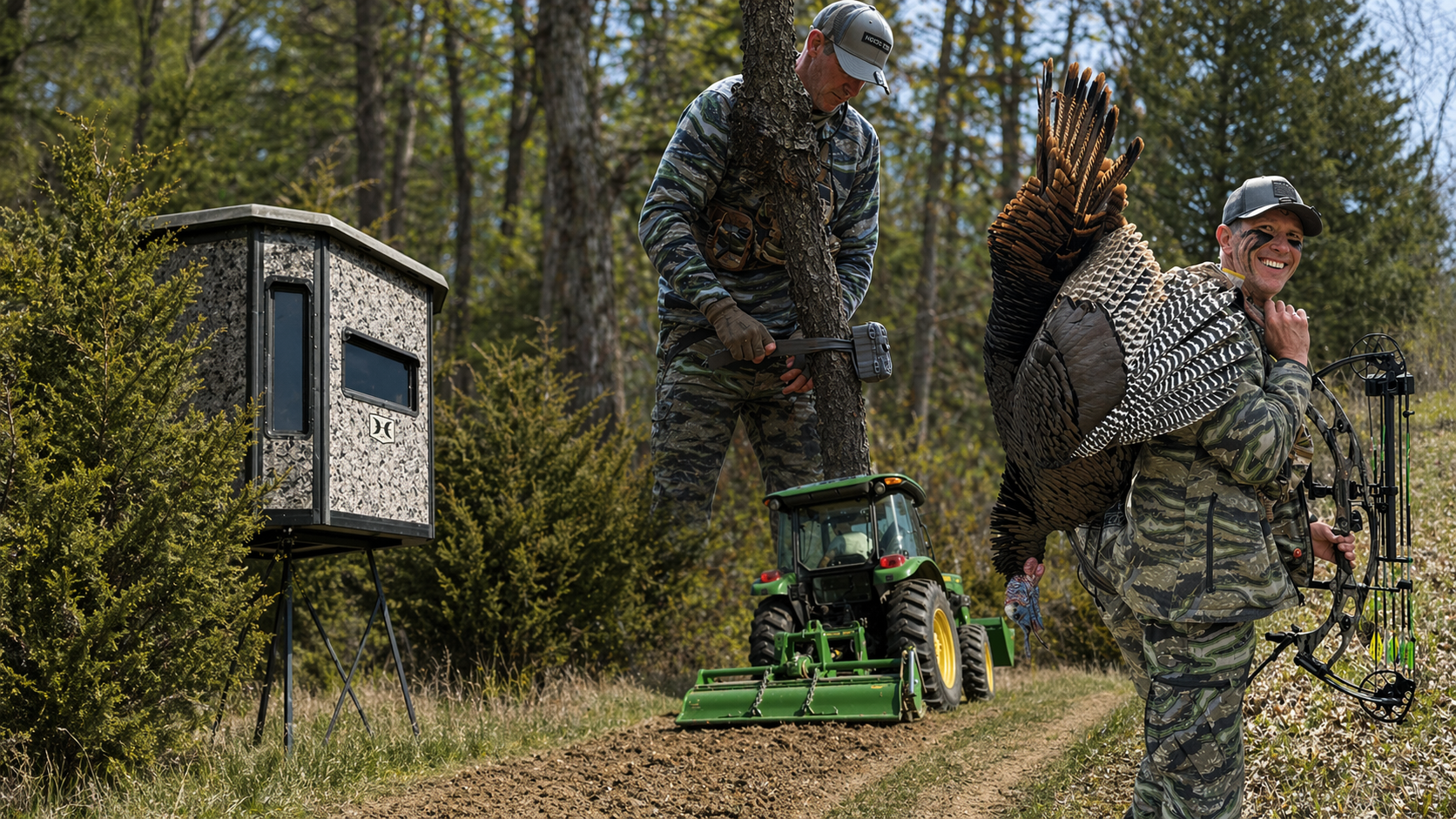
Your hunting blind needs to work flawlessly when opportunity arrives. I have a blind setup that’s historically produced for me, but even familiar locations require attention before each season.
Start with the basics most hunters overlook. Windows need to be clean for clear visibility, but they can’t squeak when you open them.
My decoys are already positioned where I want them. My chair is set and ready. When I climb into that blind in the dark, everything is in place.

Gathering Intelligence With Trail Cameras
Setting up a trail camera builds confidence in your setup. I’ve got my Stealth Cam adjusted to the right height for turkeys and set to 4K mode to capture strutting action.

Watching a mature gobbler strut 20 yards from your setup on camera does something for your mental game. You’ve seen it happen. You know it can happen.

Creating Reliable Distance References
I put a flag at 20 yards from my shooting position, and it serves two purposes. I know everything from that flag, and the closer is the top pin. No ranging or second-guessing required.
Turkey hunting often requires quick decisions when birds suddenly appear or commit to your decoys. Eliminating the ranging step means one less thing competing for your attention.

The flag is visible in low-light conditions, too. When I arrive before dawn, I can see exactly where I want to position my decoys relative to that marker.
This approach connects to how I practice. Knowing my exact shooting distance allows me to train for that specific scenario. I know I’ll be shooting 20 yards or less from a seated position, so that’s exactly what I practice.
Training for the Actual Shot
Practicing from a seated position is non-negotiable for blind hunting. I practice seated for my turkey setups so I’m comfortable with the shot before the season opens.
I dedicate specific practice sessions to seated shooting at the distances I’ll encounter in my setup. This builds the muscle memory to execute when a gobbler steps into range. You can’t develop this by only practicing standing shots at the range.
Preparation Creates Opportunity
The phrase “being lucky” gets thrown around in hunting circles, but what people call luck is really the intersection of preparation and opportunity.
You can’t control when that mature gobbler decides to work your setup. What you can control is whether you’re ready when he does.
Everything I’ve described (the clean blind, staged gear, trail camera footage, distance markers, and position-specific practice) removes variables from the equation. When the moment arrives, there’s nothing left to figure out. The system handles the details so you can focus on making the shot.
This approach applies outside of turkey hunting. Whether you’re preparing a whitetail stand, organizing a backcountry elk camp, or setting up for a mule deer ambush, the principle remains constant.
Do your homework. Prepare deliberately. Be ready for when opportunity presents itself.
That’s not luck. That’s hunting.