

Myself at full draw, demonstrating proper compound bow form.
I was at a major international competition, and I wasn’t the one competing. I was on the front lines with a camera, watching archers I’ve coached and shot alongside for years. With so much of my focus centered on coaching and development, it was impossible not to notice the small changes in form once the pressure started building.
I’d watch a shooter nail 30, 30, 30, and then out of nowhere, a 27. It happens to the best archers on the planet.
The lesson I’ve carried from events like these comes down to this. The archers who win don’t shoot perfect rounds. Unless you’re shooting at Vegas, perfect rounds are rare.
The archers who perform at the top diagnose a mistake in one or two shots and fix it before it costs them an entire end. The ones who let problems ride for several ends dig themselves into a hole they can’t escape. That same mental discipline carries over to hunting, where you might only get one shot, but then somehow be lucky enough to get a second shot and you need perfection.
The reality is that I have had a lot of success not because of my first shot, but because I keep my composure after a mistake and learn from it instantly, so that the second shot is right on the money. I’m not here to convince you that I’m a flawless hunter, because when I hear someone say, “I’ve never missed an animal,” my first thought is, “You just haven’t hunted enough.” No matter how good you are, the more you hunt, the more you know it can happen. So, in my opinion, to learn how to turn a mistake into an instant success, you need to read up!
Three areas cause the majority of form breakdowns under pressure: grip tension, facial pressure, and shoulder position.
Check Your Hands First
One of the most common areas to change under pressure is the hands. As the stakes build, tension builds with them. I saw it multiple times at this competition, and every time the tension showed up in the hands, arrows started missing left and right.

White knuckles are a clear sign of added torque on the bow grip. Jocko Willink is the white knuckle challenge winner. He has the tightest bow grip I’ve ever seen. (Don’t try it!)
One archer in particular had noticeable tension building once she reached the bigger matches. Her knuckles turned white from squeezing the front of the bow. Three arrows landed on the left side of each 10-ring, scoring a 27, and she was done.
The mechanics behind this are simple. When you grip the bow tighter, you twist the handle. That twist rotates the sight (mounted to the handle), and your arrows drift to one side.
A few left-right errors can have multiple causes, but if an entire group or end lands consistently off-center in the same direction, hand torque is the most likely culprit. Be conscious of it. The tension sneaks in through the hands before you notice it anywhere else.
Keep the front arm relaxed from the elbow forward. Fingers stay soft, not extended stiff, not tucked tight, and not squeezed against the bow. Don’t let the front hand hold the bow at all.
Your front arm alignment supports the bow through the entire shot cycle. Ideally, the bow sits against your palm, and your sling catches it after the shot.

A relaxed grip lets your bone structure do the work without adding torsional pressure.
If you find an entire end of arrows landing in the same spot off-center, check your grip before making other adjustments. Relax the front hand, and let bone structure handle the support.
The front arm only needs to work during pickup and the draw. After that, it rests for the remainder of the shot.
Keep this in mind in a hunting scenario, too. When adrenaline is pumping and you’re in full fight-or-flight mode, the natural instinct is to make a fist. That’s the last move you want with a bow in your hand.
Keep Facial Pressure Light
Archers consistently start pressing their anchor harder into their face once competition nerves kick in. I’ve made this mistake plenty of times myself. The string and the arrow shaft create contact points along your face, and any added pressure on either one throws the arrow flight off immediately.

Excessive facial contact with the string and arrow shaft causes arrows to fly unpredictably left and right.
I watched one of the best archers I know struggle through an entire ranking round. He told me his pin was in the 10-ring when every shot fired, but the arrows kept barely missing. When I looked more closely, his cheek was absorbing the string, and the back of the arrow shaft was getting heavy pressure.
Those left-right misses were a direct result of inconsistent facial pressure. If you’ve ever watched an arrow fishtail for no apparent reason, this is one of the most likely causes. String and shaft contact on your face needs to stay as light as possible.

Minimal string contact on the face gives the arrow a clean, consistent launch every time.
I try to avoid all string pressure on my face for this exact reason. If I feel any contact at all, I let it down and start over. If your natural anchor position already includes some facial contact, it’s hard to notice when “some” gradually becomes “too much.”
Years ago, I started taking close-up photos of myself at full draw to study how much my face turned into the string and arrow shaft. I made small changes to my form until the contact was barely there.
That process made a measurable difference in my consistency. Do the same with your own form.
String pressure doesn’t only show up on the cheeks. Pushing your nose too hard against the string creates the same problem. If the string barely touches your nose on some shots and gives you a pig nose on others, your arrows won’t land in the same spot twice.
Establish a baseline with minimal contact so you can detect any deviation from it. If you set up your form with zero facial pressure, any contact at all becomes an instant red flag you can act on. If your form starts with heavy pressure, you won’t feel the difference when it gets worse under stress.
Watch Your Front Shoulder Position
The most common breakdown I see at competitions is the front shoulder position. It’s a natural mistake and an easy one to make once nerves take over.
The sight pin starts moving more than normal during a match. Instead of accepting that movement (which is completely normal under pressure), the instinct is to collapse the front shoulder to steady the aim. That collapse limits scapular range of motion, prevents proper back tension, and causes the archer to “creep” on the cam.
The tricky part is this: You’ll feel like you’re building pressure on your release, but with a collapsed shoulder, you’re actually only loading the shoulder joint itself. It keeps collapsing through the shot, and you can’t pull through it.

A collapsed, high shoulder position restricts back tension and causes arrows to impact high.
Bows with low let-off, short valley cams, or peak weight set at maximum capacity make this problem worse. You’ll creep forward on the cam and send arrows out the top of the 10-ring without knowing why. The more it happens, the harder you try to hold still, and the worse the shoulder collapses.
This was a big problem for me earlier in my career. I was shooting at peak weight with aggressive cams and felt great through weeks of practice at home. Then I got into an important match, and my sight pins had more movement than I was used to.
Without realizing it, my shoulder crept higher shot after shot. I sent several arrows out the top of the 10. I wasn’t pulling through the shot; I was waiting for it to happen.

Proper shoulder position, down and forward, allows free scapular movement and clean shot execution.
Keep the front shoulder down and forward, and mentally check it before starting each pull. Recognizing this pattern completely changed my competition results. It convinced me to shoot a setup that feels almost too easy in practice, so when nerves kick in, the draw weight matches my ability instead of exceeding it.
When I later picked up a recurve bow, I fully understood how much the front shoulder’s starting position affects the entire shot. With a clicker, I could see when my shoulder was wrong; the arrow wasn’t moving no matter how hard I pulled. When I positioned it correctly from the start, the shot broke fast and smooth.
Whether you’re in a medal match or sitting in a treestand with your heart hammering, pressure affects form the same way. Top shooters feel the same nerves you do. The difference is they’ve trained themselves to catch form problems in one or two arrows and correct them before it spreads.

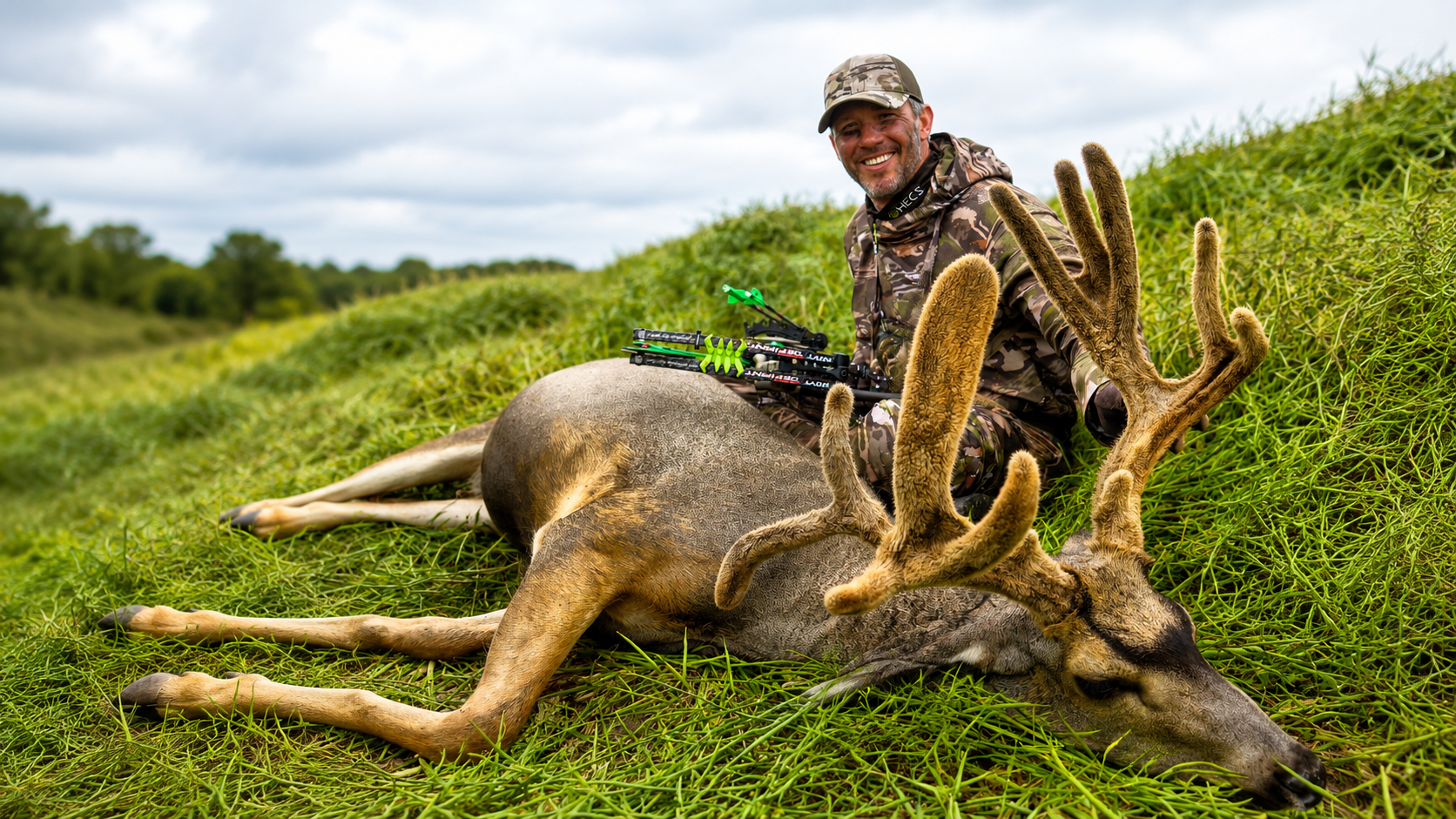
I vividly remember this hunt where I sat for hours on a Mulie buck and was certain I had ranged it well. When he finally started to stand up, I drew back and literally forgot everything about making a good shot. I have no idea if I anchored; I don’t remember even looking through the peep before I let it fly. Total miss, and as the buck darted off, I reloaded and the subconscious did every step of my shot routine on cue and completely deleted all the mistakes from the shot before, and I smoked this buck. The difference sometimes isn’t perfection; it’s being the first to correct a mistake and never make it again!
Good shots are the ones that got you into your best scores in the first place. When bad ones start popping up, act fast.
Keep your hands relaxed, your facial pressure light, and your front shoulder down. Diagnose it, fix it, and get back to shooting.