
At TAC Indiana, a guy came up to me struggling to keep his bow level. He had his sidebar mounted on the opposite side and a pile of weight on the quiver side of his bow, and he was still constantly battling his bubble. When you’re running an unusual setup just to fight your bow back to level, you’ve got a problem.
His grip was working against him on every shot. We talked about it on day one, and the next day, he told me, “Holy crap, dude, that helped so much.”
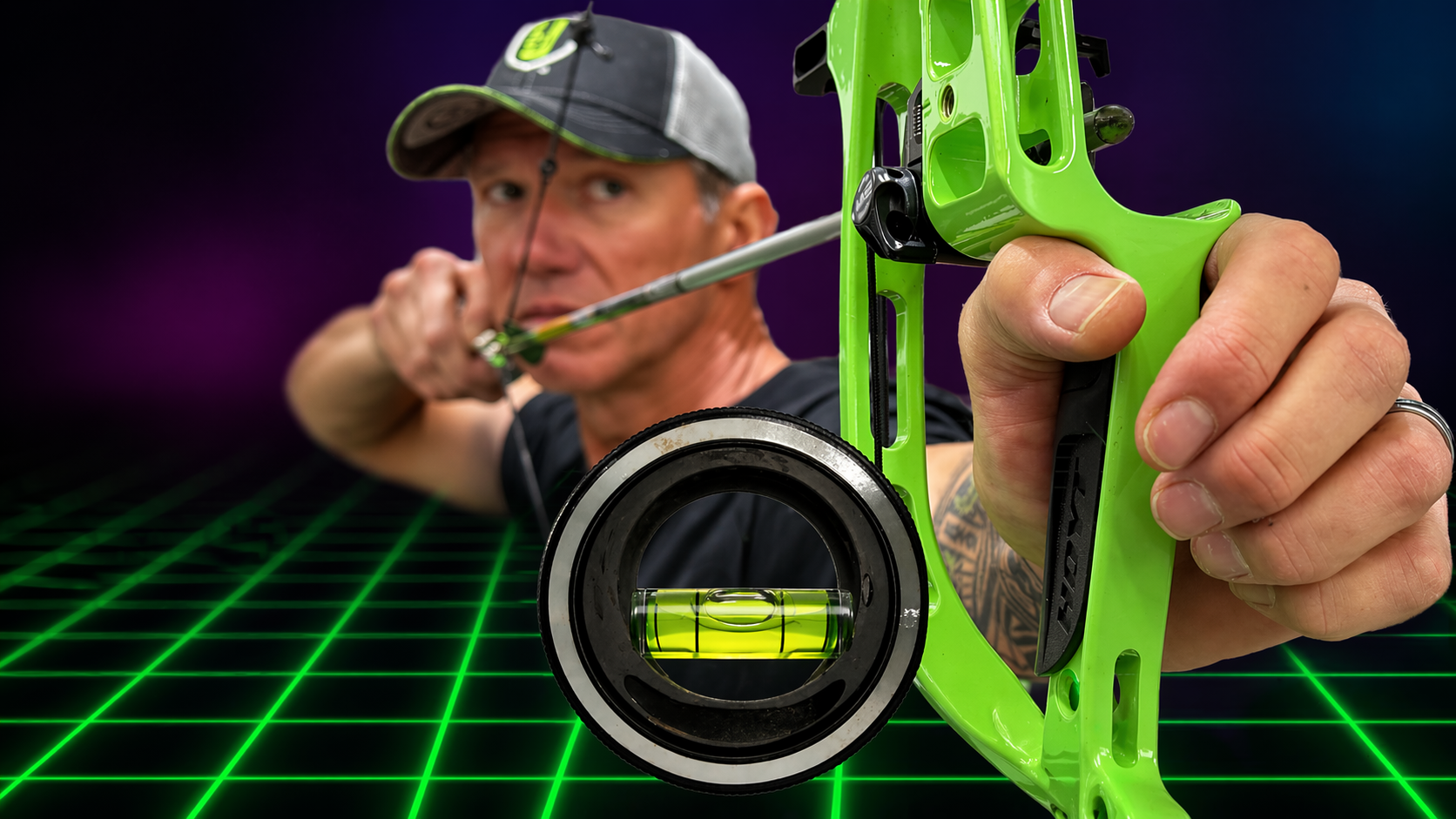
The bubble level in your sight is examining your form every single draw. It tells the truth about what your hands are doing. If you’re fighting your bubble, your bow is talking to you.
Hand Position: Where Most Archers Go Wrong
Before getting into grip mechanics, make sure your sight is properly leveled. If your mainframe is offset and you’re having to cant your bow just to center the bubble, that’s a setup problem, not a form problem.
Assuming your sight is squared away, the issue almost always comes down to the same problem: crossing the lifeline.
The Lifeline Test
We’ve talked about grip position before: hold your bow hand out with your palm facing up, bend it slightly, and you’ll see that main crease running from below your index finger around your thumb pad. That’s the lifeline.

Check whether the grip is crossing that line and seating into the meaty part of your palm. If the answer is yes, you’ve found your problem.
When your grip crosses that lifeline to the opposite side of your hand’s pad, you’re seated too deeply. When you’re too deep (crossing the grip on both sides of the lifeline) your thumb has nowhere to go but into the riser. That thumb pressure pushes against the side of the bow and cants the whole system.
The archer at TAC was doing exactly this. His hand was coming all the way across, his thumb then pointing up to the 12 o’clock position and was pressing into the riser, and he was effectively leaning or “canting” his bow at full draw. He was using all that counterweight to fight the torque he was creating himself.
Torque Works Both Ways
This isn’t only about pressing your thumb in too hard. You can introduce torque from multiple directions.
If your thumb cranks pressure into the riser from one side, you’ll cant the bow that direction. If you’re pressing with the inside of your index finger, you’ll cant it the other way. Either scenario shows up in your bubble.

The goal isn’t to balance one bad pressure against another. Eliminate sideways pressure entirely.
Building a Pressure-Free Grip
The 45-Degree Foundation
Put your bow hand out with your thumb pointing at roughly a 45-degree angle. The bow sits right in the center of the V created between your thumb and index finger, not deep in your palm. On a bow like the Hoyt Carbon RX-10, the grip geometry naturally guides you here once you’ve got the hand angle right.

Wrist Position and Pressure Distribution
Relax your wrist back, don’t lock it, don’t curl it forward. Let it sit in a neutral, slightly extended position.
When your wrist is relaxed and back, pressure distributes evenly from the saddle of your thumb straight down to where the thumb connects to your wrist. You’re loading the pad of your thumb, not your palm.

What Your Fingers Do
When your grip is correct and your wrist is relaxed, those front fingers can hang completely loose. They’re not gripping. They’re not applying any pressure to the riser.
Your thumb will lightly touch the front of the riser. Don’t turn that thumb in. Light contact, minimal pressure.
The instinct to grip is exactly what creates the torque you’re trying to eliminate. Trust the loose fingers.
Let the Bubble Teach You
On Monday, I talked about the Socrates quote, “An unexamined life is not worth living.” Your bubble is constantly examining your grip position. It tells you what your hands are doing, whether you want to hear it or not.
Reduce the pressure, reduce your torque, maximize the relaxation in your front bow hand, and that bow will level up in all kinds of conditions. No counterweights required.