


Target panic doesn’t care how long you’ve been shooting.
It doesn’t discriminate between recreational archers and those chasing podium finishes. The moment you draw back and that little voice starts repeating, “Hit the trigger, hit the trigger,” you’re in the same boat as every other archer who’s battled this mental barrier.
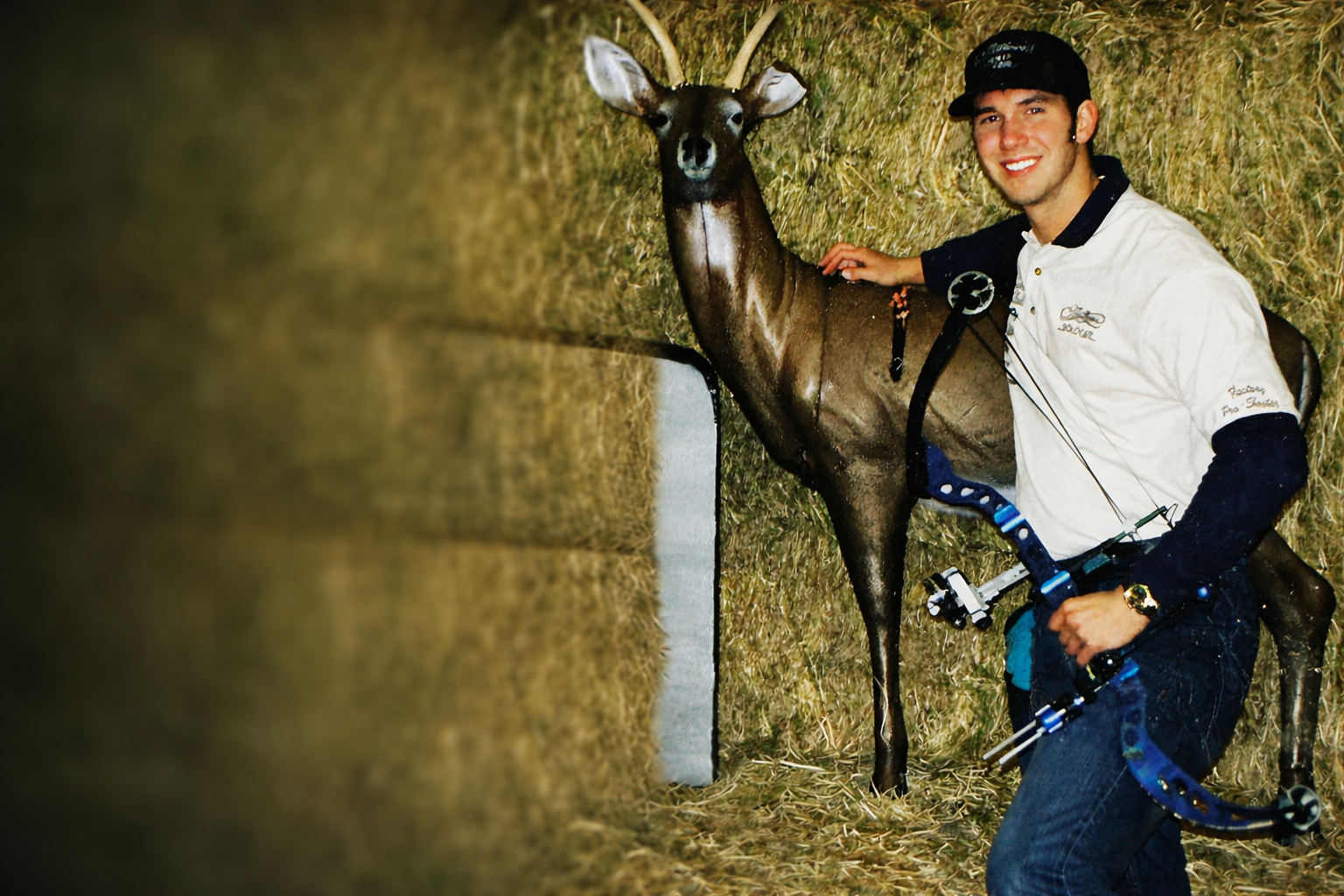
I’ve got a photo from early in my career that I keep coming back to: a younger version of me kneeling next to a 3D deer target with three arrows clustered tight in the vitals at 40 yards. That group marked the first time I ever broke through.
Before that moment, I knew what I needed to do to make a good shot. I still couldn’t do it.
The disconnect between knowledge and execution is where target panic lives, and escaping that gap requires more than willpower. It demands a complete commitment to process over outcome.
What I’m laying out here is the same framework that took me from struggling to hold my pin steady to standing on professional podiums. It’s built on honest self-assessment, the right tools, and an uncompromising dedication to building new neural pathways.
What’s Actually Holding You Back
Before you can fix your shot, identify the real problem.
For most archers dealing with accuracy issues, target panic is the root cause. It shows up differently for different people: some experience a complete inability to settle the pin, others punch the trigger the instant the sight picture looks acceptable, and some develop an anticipation flinch that throws arrows before conscious thought catches up.
The breakthrough starts with brutal honesty. Put your pin on the target and see if you can maintain a surprise shot by executing properly. If the answer involves hesitation, anxiety, or that familiar rush to beat your own shot, you’ve identified your barrier.
Randy Ulmer handed me a hinge release out of his pocket years ago. That single piece of equipment opened the door to every improvement I’ve made since. The release wasn’t magical, but it forced me into a process where punching a trigger wasn’t an option.
It removed my ability to command the shot and, in doing so, taught my subconscious what proper execution actually felt like.
The Tools That Force Better Process
Two categories of release aids break the target panic cycle: hinge releases and tension-activated releases. Both accomplish the same goal. They transfer shot activation from conscious trigger manipulation to a surprise release created through proper back tension.
Hinge releases fire through hand rotation during the aiming process. There’s no trigger to punch. You hook up to the string, draw back, anchor, and continue pulling as the release rotates through its firing sequence.
The shot breaks when it breaks. Your job is to maintain aim and trust the process.
Tension-activated releases like the Silverback operate on a different principle but achieve identical results. Instead of rotation, these releases fire when pulling force reaches a predetermined threshold. You depress a safety, settle into your anchor, and increase back tension until the release activates.
Again, there’s no conscious trigger punch. The shot happens as a natural consequence of proper form.
Both options work. The hinge release Randy gave me carried me through my early professional career. Modern tension-activated designs offer another pathway to the same destination.
Commit to whichever tool you choose long enough for new habits to replace old patterns.
The Timeline Nobody Wants to Hear
Here’s where most archers sabotage themselves: They pick up a hinge or tension release, shoot it for a few weeks, start making progress, and immediately want to return to their trigger release.
The moment they do, that old feeling creeps back: hesitation, anticipation, a voice telling them to punch it now before the shot falls apart.
I committed to trusting the process for six months before I saw consistent results. Six months of scoring myself on surprise shots rather than where arrows landed. Six months of ignoring the temptation to grab my old trigger release and “see how it feels.”
Every trophy from my rookie season came from that commitment. Every time I made a paper, every podium finish, every breakthrough in my shooting traced back to staying disciplined when discipline felt unnecessary.
And it wasn’t that single span of six months. Every time I caved and went back to a trigger too early, that familiar anxiety returned. I’d have to put that trigger release in a drawer, reset the clock, and recommit for another extended period.
I shot only that original hinge release for four to five years of professional competition before I could trust myself with other options.
Building the Archer You Want to Become
I always go back to a quote from the Roman philosopher Epictetus: “First say to yourself what you would be; and then do what you have to do.”
You already know what kind of archer you want to become. The question is whether you’re willing to do what’s required to get there. That means putting problematic equipment in a drawer, scoring practice sessions on execution rather than impact, and accepting temporary discomfort in exchange for permanent improvement.
This time of year, I still ask myself these same questions. When you see me picking up a tension release or going back to basics with a hinge, it’s not random; it’s intentional recommitment to the fundamentals that built my career. The same tools that worked two decades ago still work today because the underlying principles haven’t changed.
Target panic is 100% curable. Buck fever doesn’t have to own your hunting season. The cure is doing what you have to do as long as you have to do it, without shortcuts or compromises.
Commit to the process. Score yourself on surprise shots. Trust that when you focus on execution, accuracy follows.

Great information I ‘ve red it three times, just absorbing and understanding where I need to get my mine. Thanks