

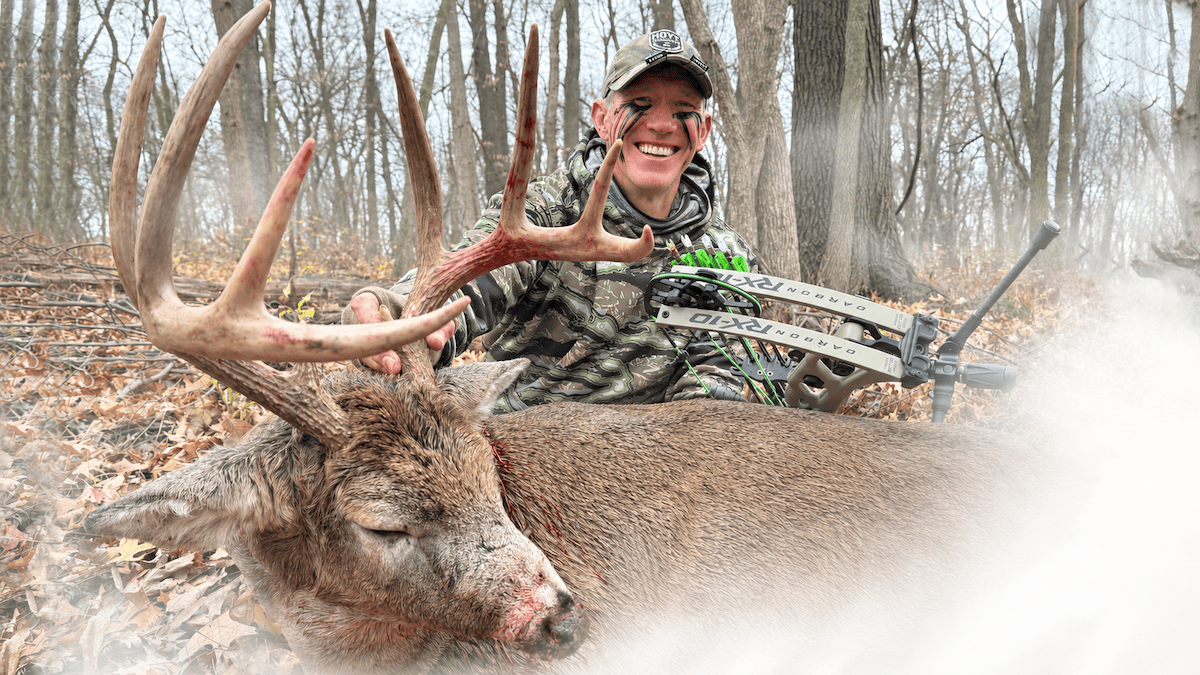
Fog changes how you hunt a late-rut sit. One especially dense morning, it got me into a spot I’d never reached on a clear day, and it changed my calling approach the second I got into the tree.
That late-November morning, I slipped into a secluded stand and committed to an all-day sit. A rutted-up 10-pointer walked into my grunts at 15 to 20 yards just after 11 a.m. Three pieces came together: I read the phase right, adjusted my calls for low visibility, and kept my gear within reach.
I grunted, put my call away, got situated, and the next thing I knew, there he was.
Reading the Phase and Getting In
The rut was winding down. After weeks of lockdown, cruisers were off does and covering ground, working travel corridors and big timber for one more chance to breed. I wanted a spot where a cruiser was going to pass through.
I’d put a trail camera in this spot over the summer. When I pulled the card and checked it, there was activity, including a mature buck walking through in daylight. This spot sits deep in what I think of as a sanctuary: gnarly timber up on high ground.
Getting in and out of a spot like that is the hard part. Up on that high ground, everything can see you. Normally that means coming in when it’s pitch black and leaving in pitch black.
I was hoping to pick up a cruiser, some buck working through the timber on his own. I was 22 feet up with an all-day sit ahead of me. Turkeys had pitched down behind me, and the fog kept rolling in and out through the trees. Just after 11 a.m., the sit paid off.
Matching the Call to What You Can See
I had my rattling antlers with me, but I was saving them for later. I could probably see maybe 80 or 90 yards. When the visibility is low, I don’t want to rattle and not be able to see what’s coming in the distance.
So I went to close-quarter calling with a grunt tube. I handle thick cover the same way. If I can hear a deer walking but can’t see it, I give it a little grunt. If I hear it stop, I wait. If it starts walking again, I give it another one. And if I can hear bucks grunting and chasing, they’re probably too close to rattle anyway.
My plan that morning was to start with some lighter grunts and end with deeper ones. I kept an eye on those turkeys behind me, gave a few grunts, and put the call away.

Why All My Gear Lives on My Chest
Everyone asks why I wear such a big chest harness. This hunt is exactly why.
The front pouch holds my calls, including the grunt tube I’ve had since I was 19, and my glasses for setting my sight. The wind checker rides in the front pocket. My binos sit in the center, and my rangefinder goes in the right pouch with the flap down, so I can pull it out, range, and drop it back in. I also keep a backup release in the side of any chest rig I wear. It all stays within my silhouette. I’ve broken down the full pocket-by-pocket layout of my chest rig before.
On this hunt, I did a few little grunts, put my call away, got situated, and the next thing I knew, there he was. My bow was on the hanger with my Nock 2 It release already clipped to the D-loop. I grabbed it, and I was ready.
Get organized. Your hunts are going to be more successful when you’re not fidgeting around for everything you need.
A Rutted-Up 10 in the Timber
He came down the slope toward my tree and stopped at 15 to 20 yards, quartering to. He was about to walk right past the base of my tree, where he would’ve pegged my wind. The arrow went through the offside shoulder, and I could see the blood spraying out. He went maybe 50 or 60 yards.
I climbed down, found a fresh rub right where he’d come through, and followed the blood trail to him.
He was a big, stinky, rutted-up 10 with a massive neck, stained hocks, and a tine through his jaw. It was thick, nasty, cold, and rainy. Just the perfect post-rut kind of weather.
The plan worked out. The fog got me into a spot I’d normally only hunt in the dark, it told me to grunt instead of rattle, and the harness meant I was ready when he came.