

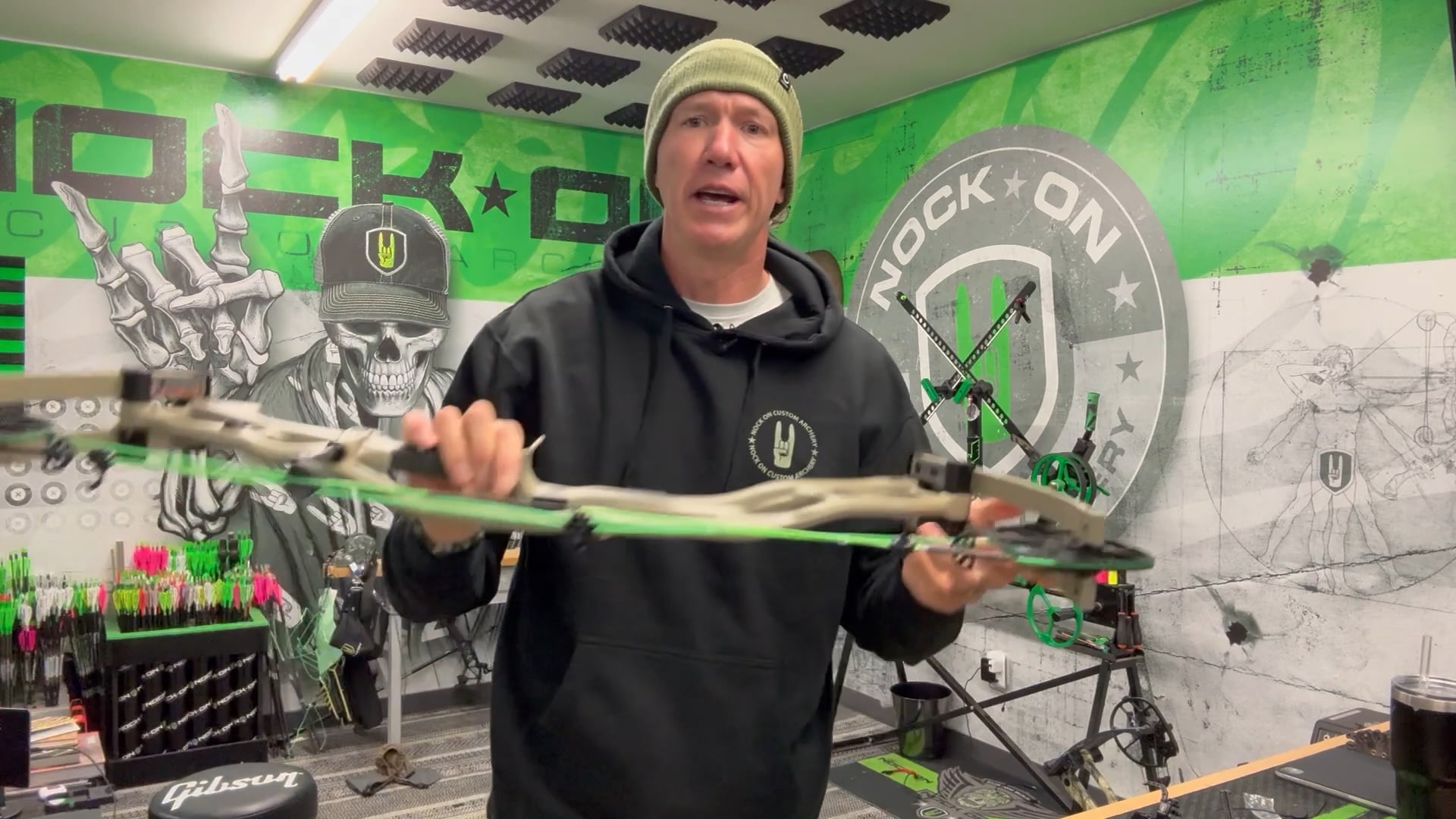
When I unboxed my new Hoyt RX-10, I couldn’t help but smile. After months of field testing prototypes, I finally had my hands on a production model.
What makes this bow (and Hoyt’s entire 2026 lineup) special isn’t the aesthetics. The XTS tuning system is changing how we dial in our rigs.
Let’s break down what makes this system so impressive and walk through my proven setup process that’ll have you shooting bullet holes through paper in no time.
The XTS System: Perfected Tunability
Hoyt wasn’t first to the tunability game, but they’ve certainly perfected it. The new XTS (Xact Tuning System) limb pocket design is the result of years of evolution in bow tuning technology.
When there’s a new concept in the market, Hoyt digs in, tests extensively, and finds their way of perfecting it. That’s exactly what happened with this system.
The XTS uses a wedge mechanism in the limb pockets that allows you to make micro-adjustments to your bow’s tune without a press. If you shoot through paper and get a right tear (arrow kicking right), simply:
- Face the bow toward you.
- Loosen the right side bolts on the pocket.
- Adjust the internal wedge system.
- Tighten the bolts back down.
- Shoot another arrow.
You can literally walk your arrows together until field points and broadheads are hitting the same point of impact.
What impressed me most during testing was the durability. I’ve put these limb pockets through absolute hell, crawling for miles on my hands and knees during some of the toughest stalks I’ve experienced. One week of post-holing on the XTS system had me worried enough to take the bow back to Hoyt for inspection.
Their verdict? All good. This system is built to last.
Outside of basic tuning, the XTS offers another advantage that’s easy to overlook. Since adjusting the wedges affects the bow’s geometry, you can fine-tune your poundage.
This becomes valuable when hunting at altitude. If your bow suddenly shoots a bit hot because the thin air affects arrow flight, you can reduce the poundage equally across both limbs to bring your bow back to your sight scale.
My Step-by-Step Build Process
Building, testing, and tuning countless bows, I’ve developed a system that saves time and delivers consistent results.
Here’s my step-by-step approach to setting up the RX-10:
1. Install the Go-Stix First
I start by installing my Go-Stix (bow stand) because it allows me to prop the bow up while working on it.
Before mounting, I cut a small piece of Gorilla tape to the mounting bolt’s width and wrap it around three or four times. This fills any slack between the Go-Stix’s concave mount and the bolt, preventing the bow from leaning left or right when standing.
But there’s another trick to getting this right: Don’t overtighten the set screw once you wrap it in tape and screw it down. That’s a common mistake.
It’s a small detail that makes a big difference.
2. Add the Stabilizer
For the RX-10, I use a Riddance stabilizer, a one-of-a-kind design that incorporates four different materials to dampen different frequencies. At about eight inches long, this stabilizer provides the perfect balance of stability and field practicality.
I’ve lightened my setup by removing two ounces from my standard configuration. When I set my bow down, I want the stabilizer length to match perfectly with the bottom limb pocket to keep my sight off the ground. This prevents the sight from getting muddy or damaged in the field, a lesson I learned the hard way on a hunt a few years back.
3. Mount the Sight
The Picatinny rail mounting system on these Hoyts makes installing a sight quick and secure. I’ve never had one come loose in the field.
I’m running the Spot Hogg Boonie 2-Pin sight, which offers micro-adjustability while remaining lightweight. Out of the box, the sight-mount position is usually spot-on, but occasionally you might need to move it up one position depending on your arrow-rest setting.
4. Install the Arrow Rest
The QAD UltraRest Integrate MX2 is my go-to rest, but not the standard version. Our Nock On edition features a deeper V with 10 degrees more pitch on both sides of the launcher, giving arrows a better cradle than the original launcher.
Historically, I wasn’t shooting the MX2 because it had more of a U shape, allowing the arrow to move up and down the sides. Our modified design creates a definitive V that channels the arrow perfectly, eliminating the left and right inconsistencies I was experiencing.
The Nock On QAD is also preset from the factory with a different centershot position that is set to where I have found the most recent bows to tune the best. Out of the box, it’s ready to rock. We also provide both gray and Nock On green rubber launcher rails and a burger button.
When mounting the rest on the Hoyt Integrate rail, here’s a tip you don’t want to skip: Line up the white arrow on the MX2 with the top edge of the hash mark that comes from the Hoyt factory. This method guarantees that when the rest drops, it has proper clearance from the shelf and won’t slap against the carbon riser. This is important for keeping your bow as quiet as possible.
I appreciate that Hoyt extends their servings all the way down to the end of the cable, so you can feed the rest’s cord through without having to add your own serving. It’s a small factory improvement that makes installation much simpler for dealers and DIY archers alike.
5. Set Up the Nocking Point and D-Loop
For the RX-10, I’ve found that setting my nock point at 90 degrees when the arrow rest is in the up position produces the most consistent results. The arrow shaft should run approximately through the rest’s label center.
From the top of my arrow nock to my peep sight’s center, I maintain six inches on these Hoyt models when the bow is at rest. This translates to about 3.9 inches at full draw when measuring the peep height straight down vertically to the arrow shaft’s center.
With nocking points tied and the D-loop installed, I’m almost ready to test.
Fine-Tuning the QAD Rest
Before shooting, I have one more tip for QAD users: Always pull a little extra cord forward before tightening down the screw on the thumb lever. This gives you adjustment room if you need to fine-tune timing without untying knots.
Timing Your QAD Rest Properly
There are two white marks on the thumb lever that are offset when you first lift the launcher, with the thumb lever on a QAD and the bow at rest.
As you draw back, those two white marks have to align perfectly just prior to you reaching full draw. This is how you ensure your rest will fall away, as it was designed.
To set the timing perfectly:
- Feed the cord through the cable, but don’t tie the knot yet.
- Raise the rest using the thumb lever.
- Draw the bow back slowly, then let down.
- The arrow rest should lift as the cord slips through the cable, aligning the two white marks.
- Mark the point where the cord naturally stops in the cable.
- Pull the cord back just a few millimeters and tie your knot.
- Draw the bow again and confirm the marks align just before the end of the draw cycle.
- Test again to confirm the rest comes up during the last inch of draw.
If the rest seems to “get away from you” before full draw, your cord is too short. This is where that extra slack becomes invaluable.
The Moment of Truth: Paper Tuning
With the bow fully assembled, it’s time for the ultimate test: shooting through paper. I nock an arrow, draw back, and release.
A perfect hole right out of the gate.
With the factory-set centershot and the XTS system, I achieved a perfect paper tune without a single adjustment. The arrow flies true with no fishtailing or porpoising. This clean, straight flight will translate to consistent accuracy in the field.
An Anticlimactic Build
I was looking forward to using the new XTS tuning system, but with a perfect bullet hole out of the gate, I didn’t get to. The system allows people to set their nocking point and centershot in an ideal position, and the Hoyt presets are spot on because they can adjust the XTS before it goes in the box.
Had I needed to adjust, it’s so dang simple to do.
Hoyt has a great video that explains the XTS tuning system in detail. Watch it here if you’re interested.
Wrapping It Up
The new Hoyt RX-10 is a massive step forward in bow technology. The XTS tuning system provides adjustability we haven’t seen before while maintaining the durability Hoyt is known for. Whether you’re a seasoned archer or just getting started, this system makes tuning your bow easier than ever.
Attention to detail matters in archery. Those small steps (lining up the rest with the factory hash mark, pulling extra cord forward on your QAD, and knowing how to time everything right) might seem inconsequential, but they create a setup that performs flawlessly when it matters most.
Whether you choose the RX-10, RX-9, or another model in the lineup, the principles remain the same. Trust the process, follow these steps, and you’ll be punching perfect holes through paper and into targets in no time.