

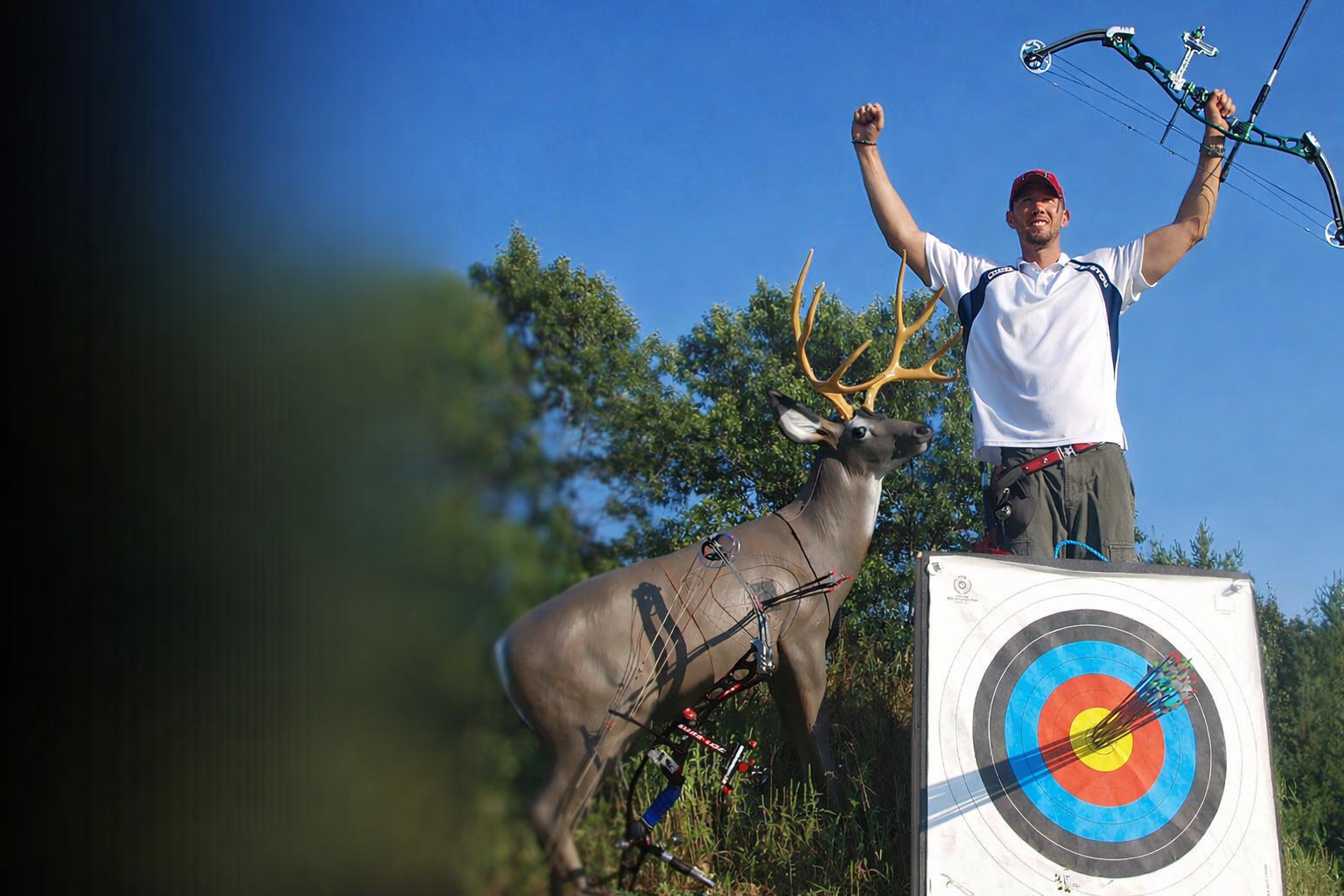
I’ve shot my elk target at 80 yards a million times. And I’ll shoot it a million more.
Do I want to make a shot on an elk at that distance on a hunt? NO. But the 40-yard shot in the wild is gravy when your sight picture is twice as big as I got prepared for. If you train at 20 yards for Vegas every day, what would happen if you show up to the event and it’s at 10 yards? You’ll clean it!
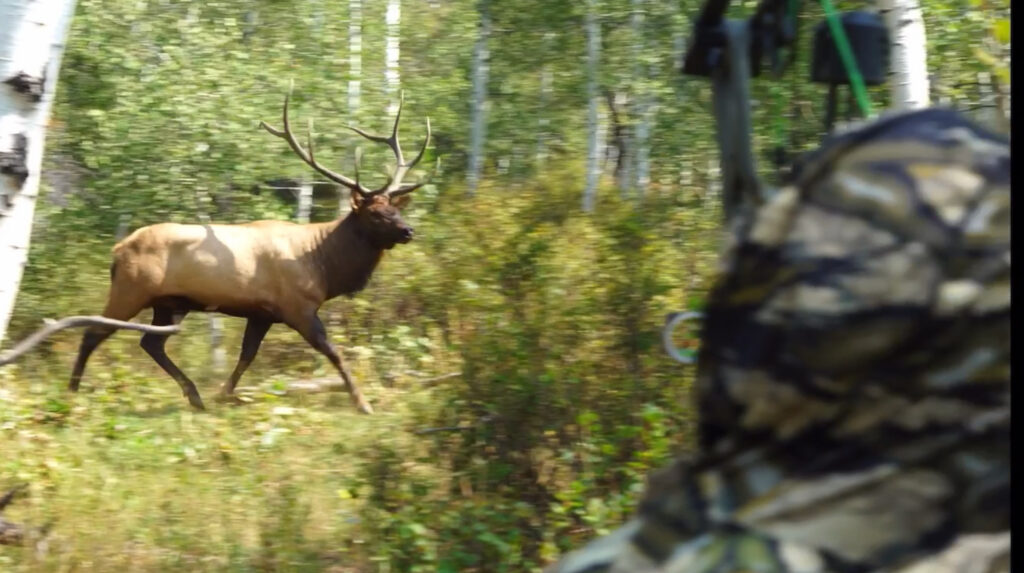
That’s the principle behind my approach to bowhunting and competitive archery. Disciplined, difficult practice builds real-world confidence, but most archers never fully commit to it. They practice at comfortable distances, avoid the frustration of missed shots, and then wonder why their confidence evaporates when a bull elk steps out at 38 yards.
Confidence comes from discipline in practice. Not from hoping you’ll make the shot. Not from positive self-talk. It comes from putting in the work when nobody’s watching, at distances that make you uncomfortable, until those uncomfortable distances become second nature.
Making your practice harder will change your hunting and competition results, and I’ve got a concrete homework assignment to help you start applying this principle today.
The “Train Hard, Hunt Easy” Philosophy
When you make practice harder than the actual event, the real deal becomes manageable.
Think about what happens when you only practice at distances you’re comfortable with. You’re building confidence for those scenarios, and only those scenarios. The moment conditions change, the moment an animal shows up at an unexpected distance, the moment wind picks up or your heart rate spikes, that narrow confidence crumbles.
Chuck Adams said something years ago in a seminar that stuck with me. When asked how far he felt confident shooting an animal, his answer was that he always felt 100% confident at half the distance he practiced at. One of the most accomplished bowhunters in history built his confidence buffer by doubling his practice range outside his intended hunting range.
This isn’t about ego or trying to take longer shots on animals. It’s about creating such a massive gap between your training difficulty and your hunting reality that pressure situations feel routine.
When you’ve been drilling 80-yard shots in your backyard for months, that 40-yard broadside opportunity doesn’t feel like a high-stakes gamble. It feels like a shot you’ve made a thousand times, and it is.
Why High-Pressure Situations Are Different
High-pressure situations are tough. Your hands shake. Your breathing gets shallow. Your mind races through all the ways it could go wrong. The bull you’ve been chasing for six days is finally standing in range, and suddenly all that backyard practice feels like it happened to someone else.
The only way to combat this is by building confidence through repetition at distances that challenge you. When 80 yards becomes routine in practice, 40 yards under pressure feels achievable. You’ve already proven to yourself you can make harder shots. The hunt becomes a matter of execution, not hope.
Applying This Principle: Lessons From Competition and the Field
When I was training for competitive archery, I focused almost exclusively on 90 meters. That was the furthest distance we shot, the hardest to score well at, and the distance determining whether you could achieve the 1400 bar. If you couldn’t hit the score at 90 meters, the other three distances were irrelevant.
The same logic applies to hunting. I practice at 80 yards on my elk target constantly; my goal is a 40-yard shot. This year, once again in the last few days of the season, that preparation paid off. A bull walked through at under 40 yards, and I made the shot. Even though he stood at 80 yards broadside for 20 seconds, giving a perfect picture as I had in the backyard, that wasn’t where I was going to send from. I wanted the chip shot, and when he approached 40, my scoring zone doubled in size, and it felt like I was on autopilot.

It wasn’t luck. I’d been putting in the work at twice that distance for months.
Building Your Confidence Buffer
Practice at 80 yards, and you’ll feel confident at 40. Practice at 60 yards, and you’ll feel confident at 30. Practice only at 30 yards, and you’ll question yourself at 30 under pressure.
If you’re only practicing at the distances you expect to hunt, you’re not building any buffer. You’re training for best-case scenarios and hoping real life cooperates. It rarely does.
When I started pushing my practice distances, I didn’t have confidence at 80 yards. Nobody does at first.
Apply a few weeks of consistent practice, then a few more weeks, then a few more. Keep clicking that shot counter. Those tough shots become easier, and the distance that once felt impossible starts to feel routine.

The Total Archery Challenge Example
Total Archery Challenge events prove this works on a large scale. In the early years, everyone complained. The shots were too hard, the distances were too long, and the courses were too tough.
People were losing arrows on challenging targets and getting frustrated.
Fast forward to now: Everyone is out there, wives, kids, experienced archers, all dropping bombs on targets that would have seemed impossible a few years ago. People don’t dread the hard targets anymore. They wait for them.
The community developed confidence through discipline. They stopped shooting paper plates in the backyard and waiting for easy 20-yard whitetail opportunities. They started training for difficult shots, pushing their limits, and getting better.
People didn’t suddenly become more talented. They changed their practice approach. They made it harder, embraced the frustration, and came out the other side as genuinely better archers.

The Compounding Effect of Difficult Practice
This approach’s benefits multiply over time.
Early on, you’re building basic competence at longer distances. But as weeks turn into months, you’re developing shot execution under fatigue, sharper wind reading skills, and real mental toughness. Longer distances are more demanding, errors get magnified at range, and any form breakdown shows up right away.
These skills carry over to hunting situations where conditions are rarely perfect and pressure is high.
Your Homework: Make Practice Harder This Week
Pick one part of your normal practice routine and make it a little harder this week.
This doesn’t mean you’ve got to start launching arrows at 100 yards tomorrow. Start where you are and push slightly outside your comfort zone.
If you normally shoot at 30 yards, add some 40-yard work. If 40 yards is comfortable, extend to 50 or 60. If you always practice in calm conditions, go out when it’s breezy.
The specific distance matters less than the principle. You’re training your brain to handle difficulty, building the neural pathways that fire automatically when an animal is standing in front of you and your heart is pounding.
At first, you won’t have confidence at these new distances. That’s the point. You’re supposed to struggle. You’re supposed to miss. You’re supposed to feel frustrated.
That frustration is the price of admission for the confidence that comes later.
Keep a shot counter. Track your progress. Watch as shots that felt impossible in week one become routine by week six.
That progression, from uncertainty to competence to confidence, is exactly what we’re after.