
Most archers train for exactly what they expect to face.
A Vegas round calls for 30 arrows, so they shoot 30 in practice. They replicate a 60-arrow five-spot session at home, and that’s it. This approach feels logical, but it’s the reason so many shooters plateau and crumble when unexpected pressure hits.
This week’s School of Nock homework focuses on one adjustment: raising the bar on your preparation.

You Fall to the Level of Your Training
Under pressure, you don’t rise to the occasion. You fall to the level of your training. That one concept changed the way I approached competitive archery and hunting.
Once I’d trained like a champion, I could perform like a champion and rise to the occasion during an event. But only once my training had hit that level. Before that realization, I wasn’t training for anything past what the competition required, and it held me back for years.
Why is that? Because CHAMPIONSHIPS GO INTO OVERTIME.
Scoring rounds are after warm-ups, and finals are after scoring rounds. MEDALS are handed out AFTER sudden deaths in the FINALS! Likewise, countless numbers of bull elk tags were notched AFTER triple-digit miles of humping hills. Broadheads cut fur after my heart was beating out of my chest, the footing wasn’t level, and the angle was steeper than a backyard range.
You get the point. If you hadn’t prepared for any of those scenarios, then you’ve already learned to lose!
The Trap of Training to the Minimum
For years, I made the same mistake most competitive archers make. Preparing for a 30-arrow Vegas round meant shooting exactly 30 scoring arrows and calling it a day. Five-spot practice meant a clean 60-round, then I’d pack up.
The problem wasn’t my form or my equipment. I wasn’t training for the extras: the letdowns, the extra rounds, the single-arrow sudden deaths when you’re tied and it all comes down to one shot.
I was training for the minimum, then wondering why I couldn’t perform at the maximum when it counted.
Building Over-Preparation Into Your Practice
The change happened when I started designing my training to exceed competition demands. The Nock On logos on our target faces aren’t decoration. They’re there for a reason. These are based on what I used to do when I would pin up an extra spot next to my scoring face.
After completing my scoring arrows on a Vegas column or five-spot target, I’d put one more arrow into that extra spot. On our training targets, I put a logo. Every session, that extra shot became non-negotiable, part of the routine rather than an afterthought.
If I had to let down, if I went into extra rounds and suddenly had to do single-arrow sudden death, putting that extra arrow downrange was familiar. It was part of the training I’d already done over and over.
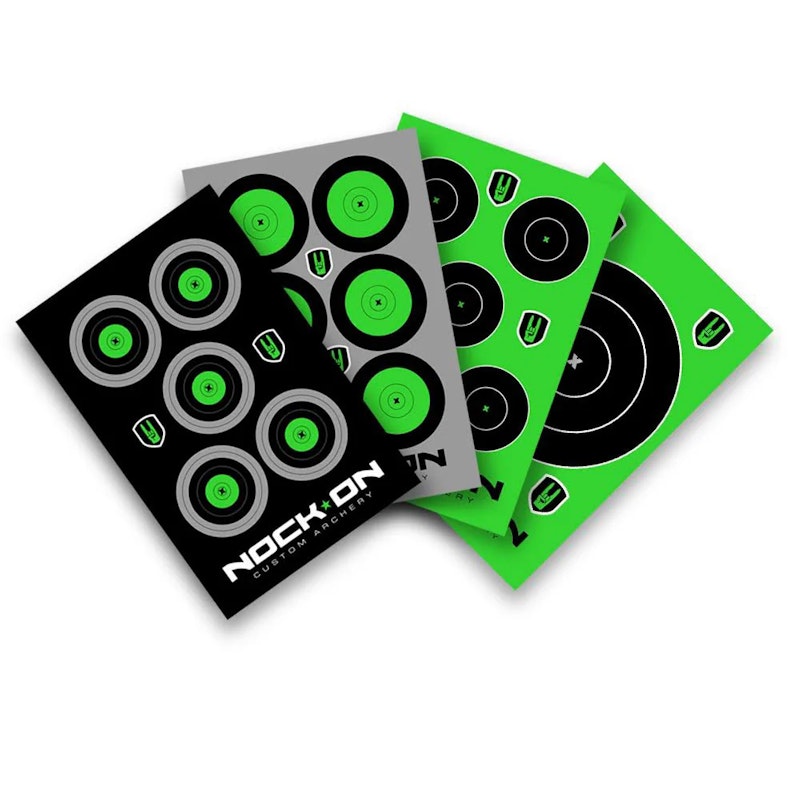
The Power of Four training method grew from this same idea. I was trying to over-prepare and raise the bar on my preparation, so overtime felt like any other part of practice. Many people shoot three arrows for a practice round; I did four. Over all my years of training, I’ve learned four is just the right amount where you need added stamina, but it isn’t so many that cause your last arrows to be less than strong.
More arrows per end may sound better, but if you’re breaking down in technique for arrows five and six, you’re reinforcing poor habits 33% of the time. Think about that.
Winning Starts With Accepting Loss
I was in a shoot-off with Jeff Hopkins years back, a guy who was unstoppable during that era. I asked him how he’d become so great.
His answer was simple: “I just figured out how to win.”
That stuck with me for weeks. I went home and started thinking about it, and I realized I hadn’t learned how to win, but I also hadn’t learned to lose.

When I lost, I wasn’t accepting it deep down. That’s when it’s dangerous, because EXCUSES ARE EASIER TO FIND than Walmart bags in the pantry. I wasn’t going back and applying more work to raise my training to the level of the champions I was competing against. I was just getting pissed off, practicing poorly, and under-preparing to face world-class archers.
Those top guys hadn’t learned to win from mediocrity. They’d learned to win by raising their bars and competing against each other. They pushed the standard higher every time they went head-to-head.

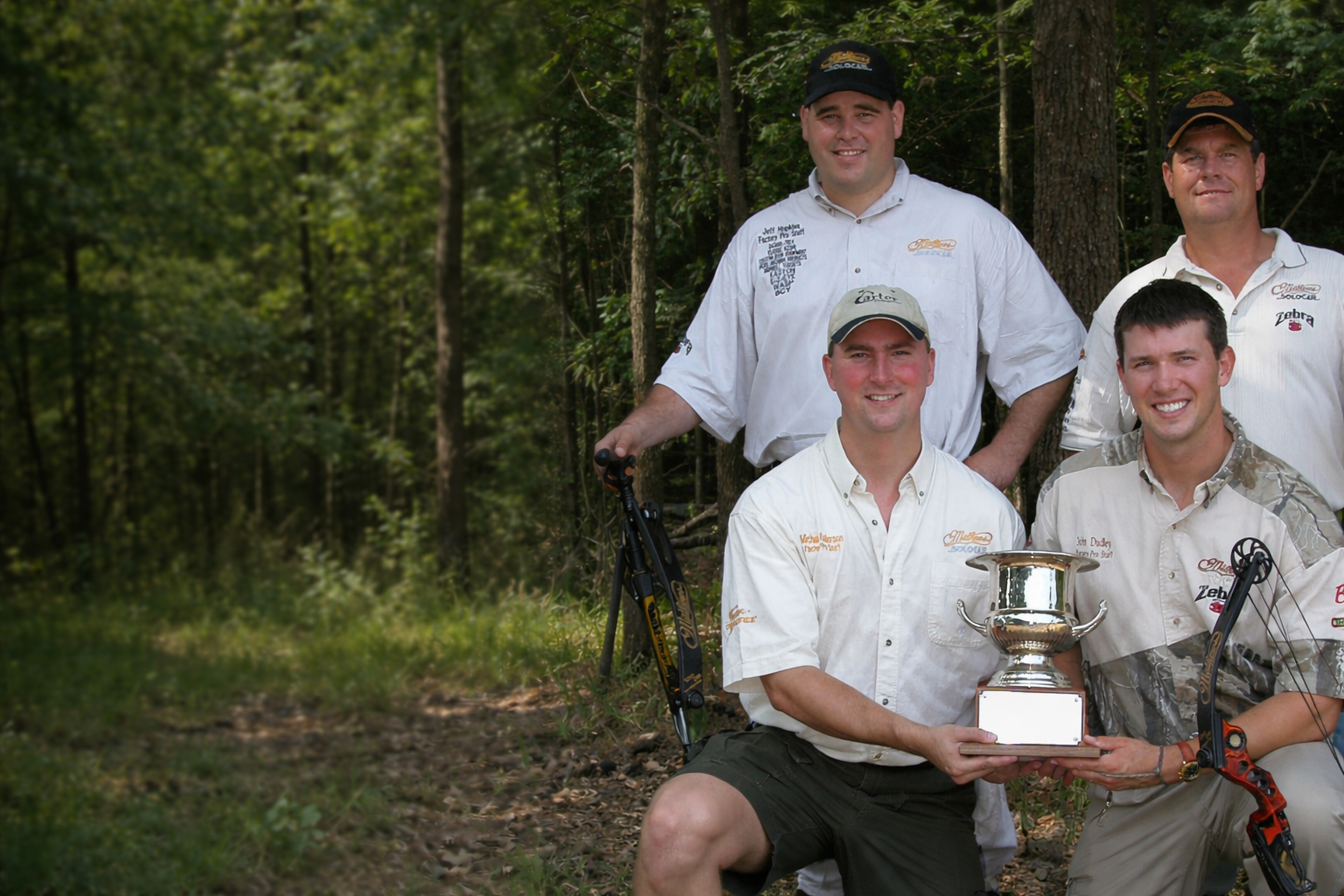
Years later, Jeff and I were teammates on one hell of a National Championship team along with Michael Anderson and Colin Booth. We totally dominated the Triple Crown.
Turn Up the Dial
A big part of this is learning how to win, figuring out why you’re losing, and putting in the extra work on the targets. Make your training harder than what you’ll face on the competition line or in the treestand.
If what you’ve been doing hasn’t gotten you to the level you want, you’ve got to turn up the dial. Work harder, train harder, and over-prepare. The performance you want is waiting for training that matches it.