

When you’re sitting in your treestand as autumn’s chill settles across the Midwest, nothing gets your heart racing like watching a mature buck respond to your call.
Calling deer requires strategic timing, wind direction awareness, and understanding deer behavior at a granular level. When done right, it’s one of the most effective and exciting tactics in your bowhunting arsenal.
The Perfect Time to Start Calling
Right now, when the Midwest rut kicks into gear- soon the south will kick off. This is when calling tactics truly shine. You’ll know it’s time when bucks go from nocturnal creatures to daylight travelers that actively make rubs, refresh scrapes, and check does.
Rattling antlers work well during two windows:
- The pre-rut phase when testosterone levels are climbing but most of the doe aren’t ready
- After that brief lockdown period when the first does have been bred and bucks frantically search for the next receptive female
During these phases, bucks become territorial and competitive. The sound of antlers crashing together triggers a primal urge. They can’t resist investigating a potential challenger or breeding opportunity.
Understanding Deer Instincts for Successful Calling
When it comes to calling deer, knowing their sensory priorities changes your approach. Think like a deer, not like a hunter.
The Wind Factor: Their #1 Defense
A deer’s nose is its primary survival tool. When they hear rattling or grunting, their first instinct is to pinpoint that location but then they will circle downwind to scent-check what they’re hearing.
You want to restrain from calling when the buck is located behind your 180 degrees of downwind. This will prevent them from having an easy angle to cut off your wind. You need to have them more on your upwind side of 180 degrees.
I’ve watched countless hunters call to a deer that’s already approaching their downwind side.Don’t do this. It’s guaranteed to end with the deer catching your scent and blowing out of the county. Instead, call when the deer’s natural circling behavior brings him into your shooting lane.
Sight: Their Second Line of Defense although they use it first.
If a deer can see you when you’re rattling, it’s game over. Those white antlers flashing through the woods look nothing like natural movement to a deer’s motion-sensitive eyes.
When I’m hunting in open terrain or if I spot a buck in the distance, I turn my back to the deer and position myself against a tree before rattling. This conceals both my human outline and the antlers’ unnatural movement.
I’ve had bucks come charging in within seconds using this technique. They hear the fight but can’t immediately pinpoint its location.
Tactical Approach to Rattling
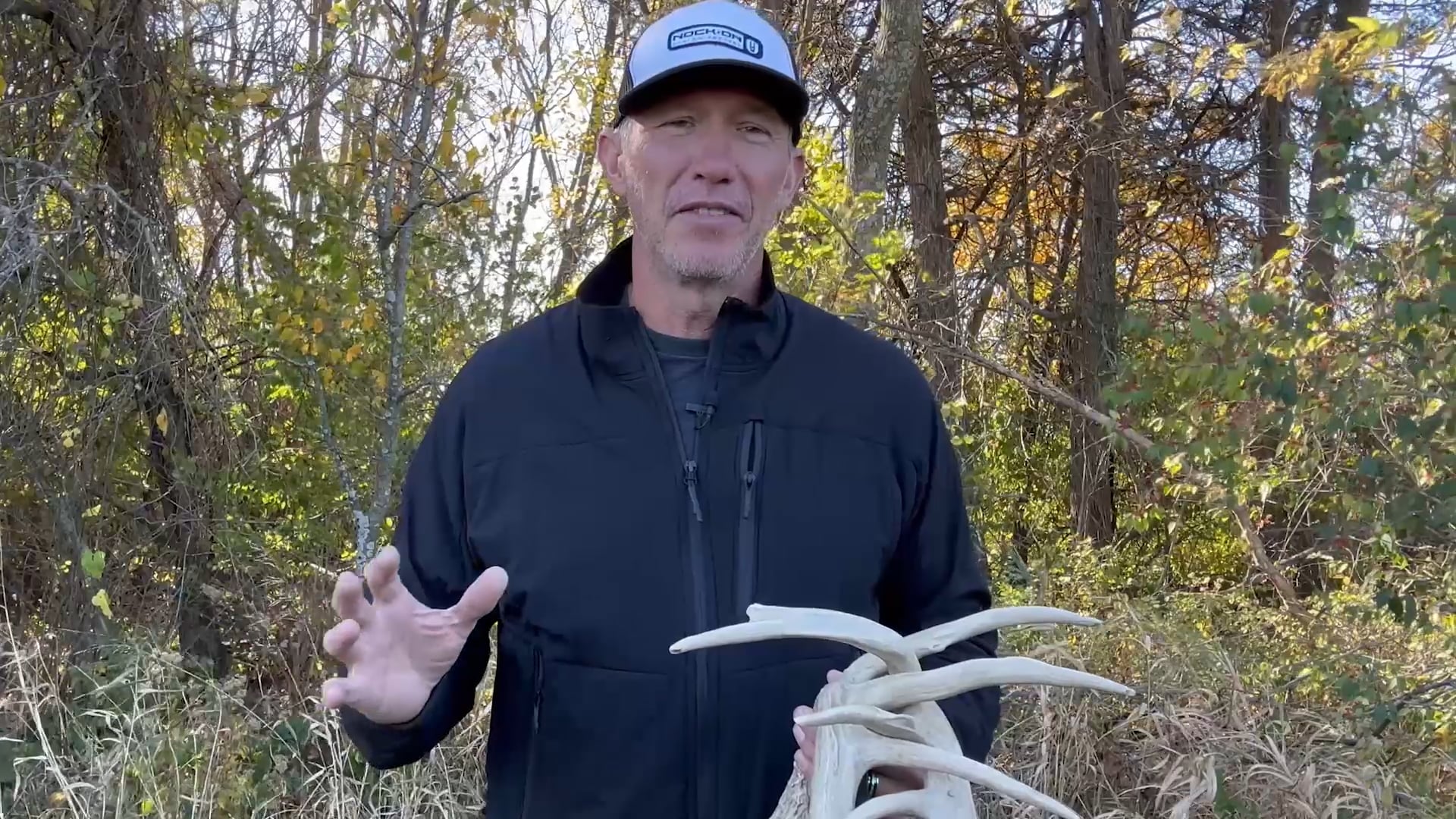
After 20 years spent carrying the same set of rattling antlers, I’ve developed a system that consistently produces results.
The Right Gear
I use large antlers for two reasons:
- Big antlers call in big bucks. I’m not interested in tickling small tines together to attract young deer. If you aren’t happy with any kind of buck then smaller tines are certainly less intimidating to younger bucks.
- Larger antlers create more volume with less movement, which makes concealment easier.
Whatever antlers you choose, make sure they’re easy to carry quietly during your walk to your stand. Nothing ruins a hunt faster than announcing your presence with clanking antlers on the hike in.
I keep mine quiet by locking them together with an old wrist strap off an old release.
Preparation Before Calling-
Be Ready!
Before I start rattling, I make sure:
- My bow is ready with release attached
- My back is against a tree for cover
- My seat is down so I can quickly stash antlers
- I have a clear place to set down or store the antlers if a buck appears suddenly
When a buck responds to rattling, time moves fast. Being completely prepared before making that first sound has saved me countless opportunities. Remember you are now the hunted.
The Rattling Sequence
My typical rattling sequence lasts about 30 seconds and includes varied intensity. I don’t just slam them together. I create a realistic sound story:
- Begin with light tine tickling, simulating antlers coming together
- Progress to pushing and grinding sounds
- Escalate to louder clashing
- Back off briefly as if the bucks are catching their breath
- Return to intense fighting or make a few grunts
- End with one final hard separation
This mimics the natural progression of a buck fight rather than just monotonous crashing. Throughout this sequence, I’m constantly scanning for movement. At the first flash of hair, I immediately drop the antlers and prepare for the shot.
I typically rattle once per hour during all-day sits, but only when I’m certain no deer are in sight that might spot my movement. Timing is everything.
Grunt Tubes: The Versatile Calling Option
A quality grunt tube is equally effective and can be used throughout the season. Understanding the different vocalizations deer make and when to use them is critical.
Natural deer grunts vary:
- Fawns make light, almost buzzing sounds
- Dominant bucks produce deeper, more guttural grunts
- Bucks chasing does emit rapid-fire, sequential grunts
When calling, I typically adjust my grunt tube to just below the deepest setting for general calling. I’ll go fully deep when I see a mature buck that needs challenging, or higher-pitched when I’m trying to sound less threatening.
My standard calling sequence consists of two to three grunts spaced a second or two apart, followed by a series of faster, sequential grunts. I’ve watched dominant bucks make an immediate 90-degree turn and come straight to this call sequence.
Don’t Educate Deer
If there’s one mistake I see hunters make repeatedly, it’s calling to deer they have no intention of shooting. When you call to a deer and then don’t shoot, you’re training that animal to be suspicious of those sounds.
If it’s not a deer you intend on putting your tag on, don’t call to it. Even if you think you’re being stealthy, that deer will eventually catch your wind or spot your movement, creating a negative association with the sounds of rattling and grunting.
Eventually they will know something isn’t right and start snorting or stopping. Neither of these do you any favors. Call to what you want to come in and let the others walk.
Practice your calling technique away from your hunting areas (like a buddies spot!) Perfect your skills before the season, not on live deer you don’t intend to harvest.
Putting It All Together
Successful deer calling is about understanding deer behavior, anticipating their response, and setting up the scenario to work in your favor. The pre-rut and post-lockdown phases in the Midwest create perfect windows for these tactics.
When executed correctly, calling can bring a mature buck from hundreds of yards away right to your tree. Few hunting tactics create more adrenaline-pumping encounters than watching a dominant buck respond to your call, searching for a challenger that doesn’t exist.
As the rut is in full swing in most areas, have your calls ready, understand the wind, and be prepared for quick action. When that buck appears, you’ll experience one of bowhunting’s greatest thrills.