
If you’ve bowhunted long enough, you know the scramble: the arrow hits, the animal bolts, and suddenly you’re trying to nock another arrow, find your release, range the target, and get back to full draw.
That scramble is nothing like standing on the range shooting one arrow at a time. A drill I call speed loading trains you to get on that next target as fast as possible.
Even if you’ve never missed a shot or never lost an animal, it’s only a matter of time. Building a repeatable shot process handles the execution. The gap between your first arrow and your second is a different part of the process, and it takes reps in your practice routine to lock it in.

Speed Everything, Then Slow Down
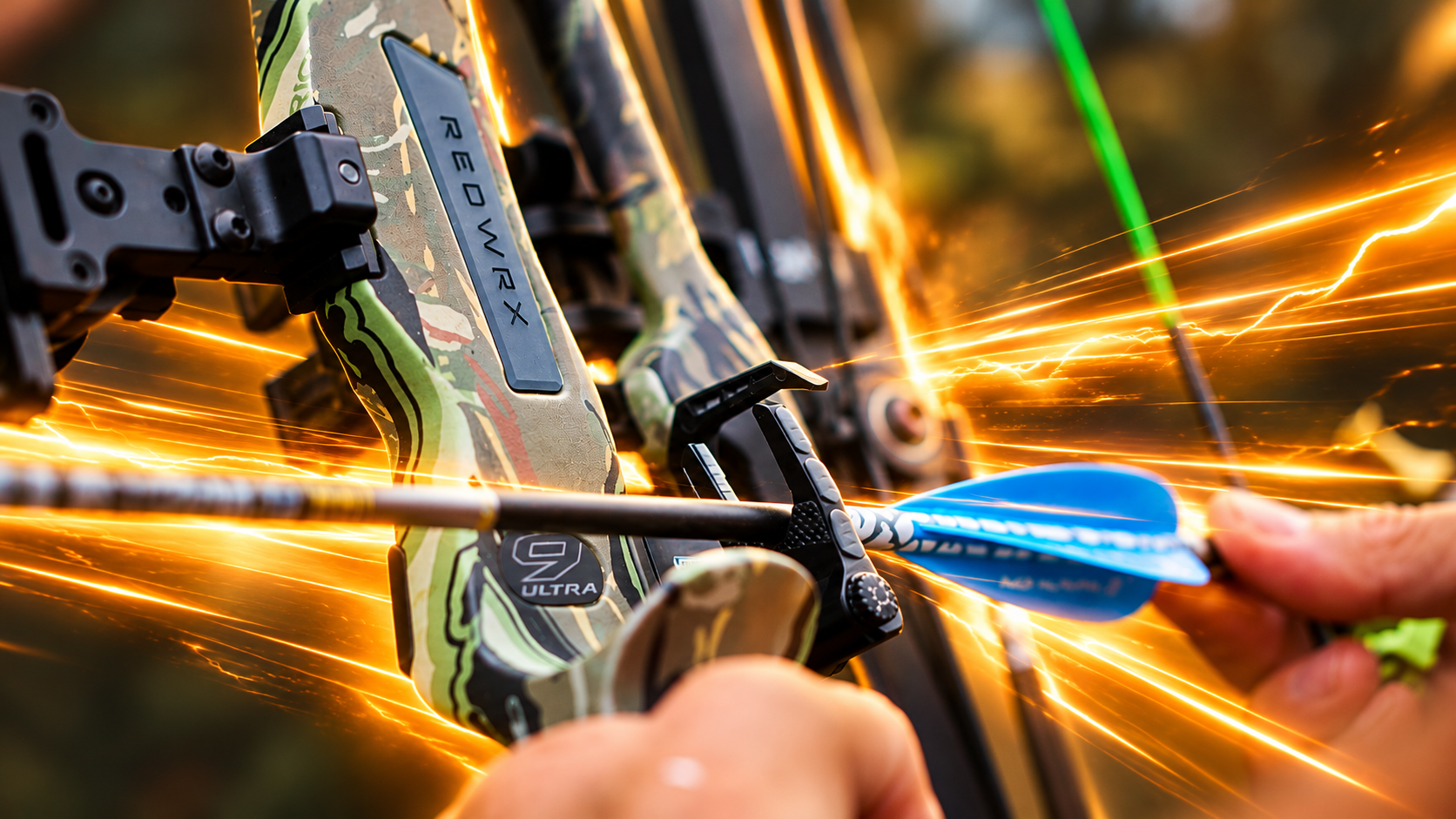
Speed loading is full speed until your thumb touches the trigger. From the instant your first arrow leaves the bow, move fast. Grab the next arrow, get it on the string, clip your release back on, draw, anchor, and acquire the target.
Every step from arrow to anchor happens at full speed. The moment your thumb starts to shape on the trigger, slow back down to your normal shot tempo. Get on that next target as fast as possible.
The drill compresses the dead time between shots. Your pull-through and finish don’t change.
The drill works in two gears. Gear one is reload speed: arrow, release, draw, anchor, acquire. Gear two is execution speed: trigger shape, pull, finish.

Train reload speed and execution speed separately so they connect in the field. The full chain in order: load, get the release back on, draw back, anchor, acquire the target, and pull through. Every piece of that chain gets faster with reps.
How to Run the Drill
Start at a close target. Shoot, then immediately speed-load and transition to a far target. Shoot the far target, speed-load again, and come back close.
That close-far-close pattern mirrors real follow-up shot situations. You never know when an animal will run at you, and the distance changes every time.
The close-far switch puts you through the same kind of target changes you’d face in a real follow-up scenario. You can’t settle into one distance.

On an unknown-distance range, add a rangefinder into the sequence. Shoot, range the next target, reload, set your sight, acquire, and execute. That added step of ranging and adjusting the sight is what the field demands.
I like to train beyond my comfort zone on these reps. Mixing in longer targets forces me to work the sight and commit under time pressure. Run the full chain over and over until the reload is automatic.
Make It Systematic
Build speed loading into your regular practice routine. A few rounds at the end of a session is enough. The more you work this drill, the more natural it becomes when you need it in the hunting field. Become target accurate in the hunting field with more speed.
That’s the goal: a reload that feels natural when the moment comes. Build the reps now so the system is already in place when a first shot doesn’t finish the job.