

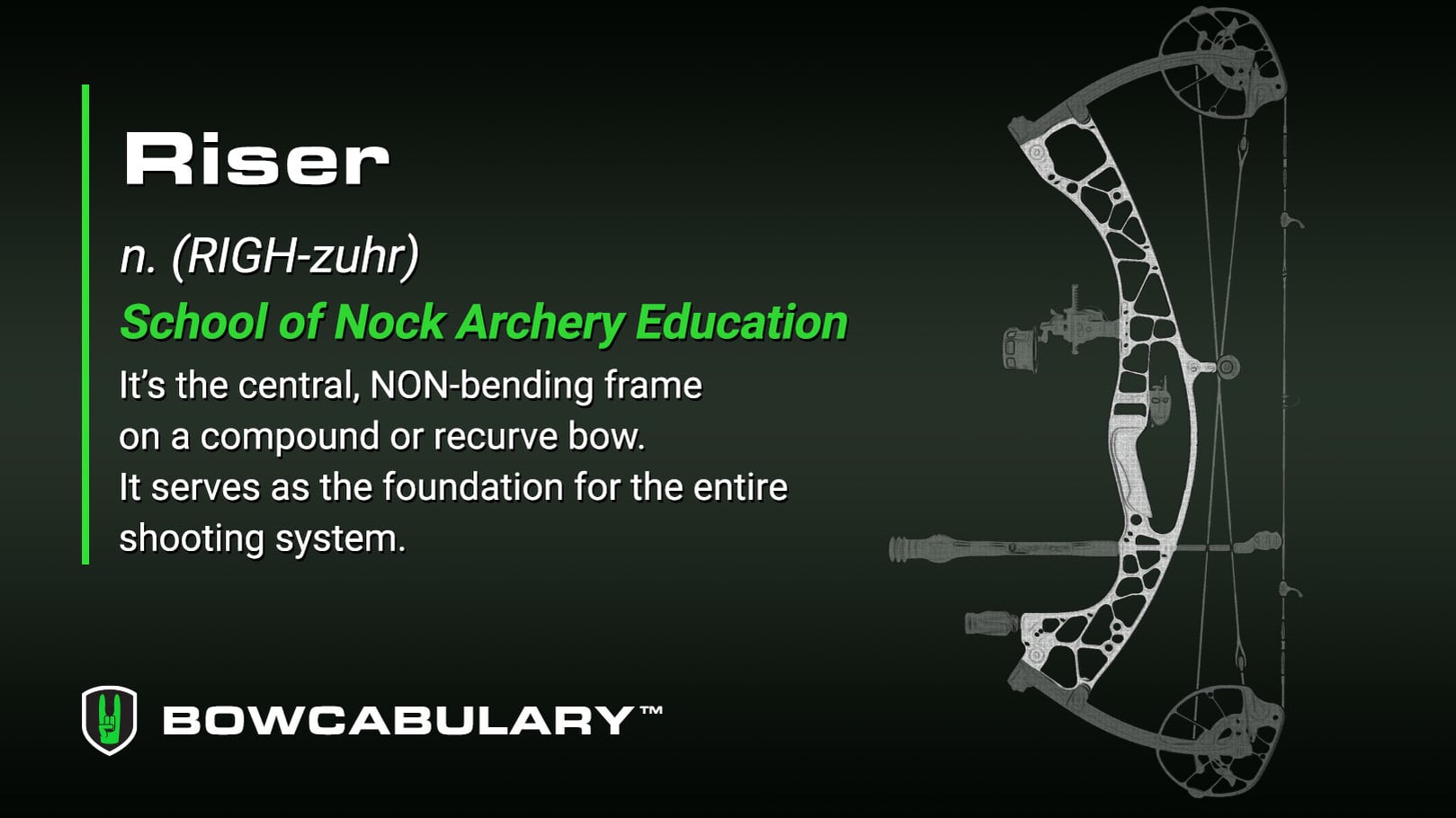
The riser is the central, non-bending frame of your compound or recurve bow. Everything in your shooting system mounts to it: your grip, arrow rest, sight, quiver, cable system, and stabilizer. On some target bows, the grip is built directly into the riser rather than bolted on.
Either way, the riser is the foundation your setup depends on.
Why Rigidity Matters
The limbs flex. The cams move. The string moves. The riser doesn’t, and that’s the point.
Any variation in your grip or hand position gets transferred to the bow at the shot, so you want the riser solid, stiff, and torque-free. The more rigid it is, the more it can absorb inconsistencies in your technique without letting them show up in your arrow flight.
Materials and Construction
Most risers are made from aluminum, magnesium, carbon, or wood. Each material carries its own balance of weight, strength, and cost.
Modern flagship bows use intricate machining with cutouts from nearly every direction to shed weight without sacrificing strength. A wider stance adds stability, and today’s risers end up lighter than older designs and more rigid.
Reflex vs. Deflex Design
When I look at riser geometry, it comes down to two main design categories: reflex and deflex.
A reflex riser positions the limb pockets, or the pivot point of the limb rocker, forward of the grip. This brings the string closer to the grip, which shortens brace height, keeps the arrow on the string longer, and produces more speed. Most hunting bows use a reflex design: heavier arrows need the extra power stroke to get downrange.

The trade-off is forgiveness. When the pivot point gets too far forward, hand variation starts to magnify the limbs’ and string’s movements, and accuracy suffers. Older speed bows with aggressive reflex designs are a good example of that trade-off taken too far.
A deflex riser does the opposite. The grip sits forward of the pivot point, pushing the string back and increasing brace height. I always picture the letter D with the string as the straight back edge; that’s a deflex design.

A longer brace height means the arrow leaves the string sooner, so torque or facial pressure you apply during the shot has less time to influence arrow flight. That extra forgiveness makes deflex designs popular in recurve bows and older compound target bows. The cost is speed.
Truss Systems and Shoot-Through Risers
Hoyt’s TEC Riser uses a patented truss system that runs behind the grip to add rigidity against the riser flexing backward under draw.
Think of the truss work on a bridge or in roof framing: it adds structural support in the direction the system is under the most stress. Bows without a truss system typically compensate with a thicker, wider riser to achieve similar rigidity.


The third riser type is the shoot-through riser, where the arrow passes through a window in the riser rather than over it. The leading target bows in the world use this design: the shoot-through frame adds rigidity laterally, minimizing torque and flex under the pressure of a full draw.

For target archers shooting field points, feeding an arrow through that window is no problem. For bowhunters running broadheads, it’s a different story. Getting a broadhead through that system cleanly, with cables and strings in the way, in a fast-moving hunting situation, makes the shoot-through riser impractical in the field.