

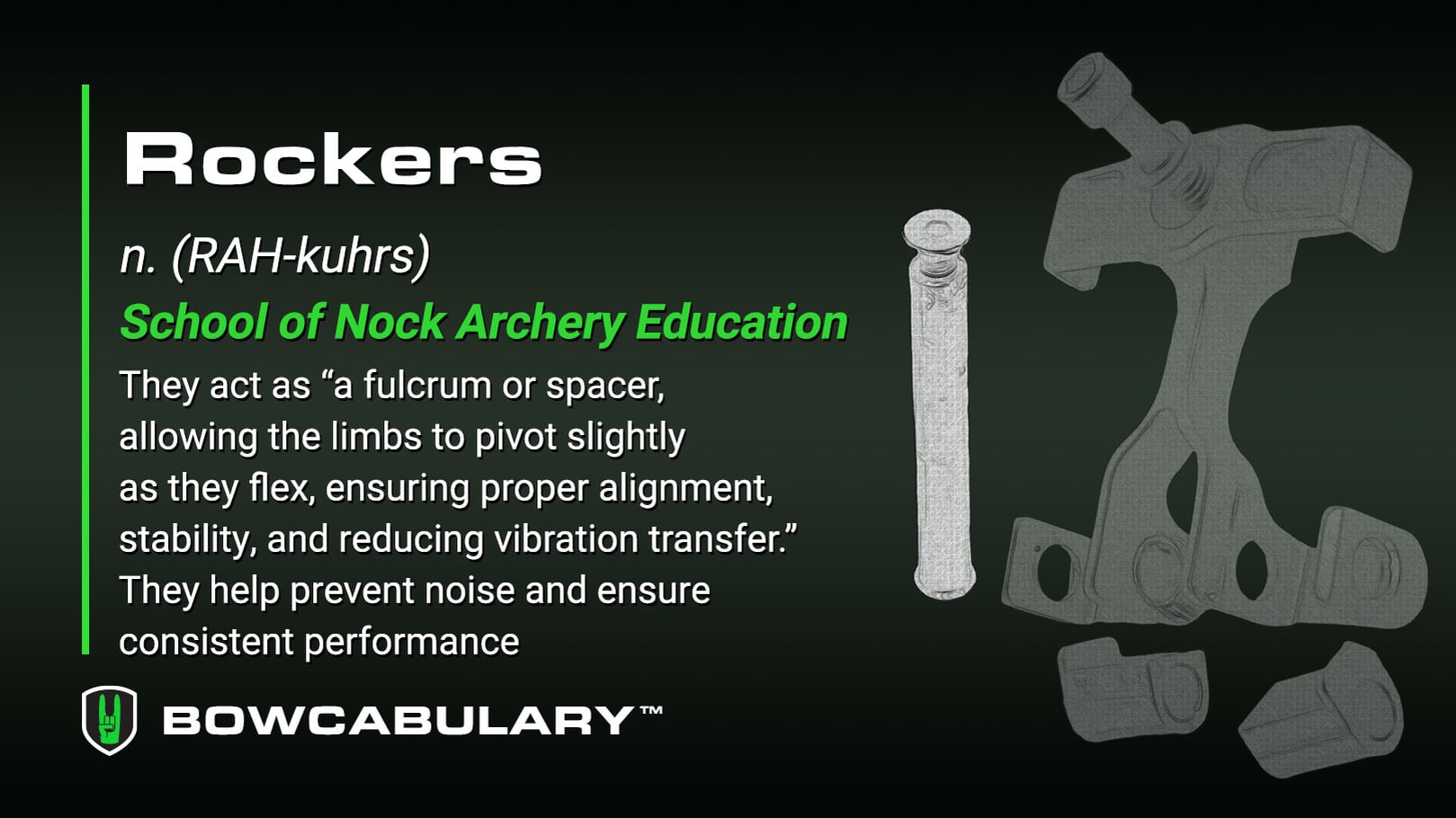
Most archers never think about their limb rockers until something goes wrong. A mysterious click on the draw, a noisy pocket, or inconsistent arrow flight can all trace back to this small but critical component.
Know what a rocker does and how to maintain it, and you’ll have a better understanding of how to maintain it and keep it clean.
What a Limb Rocker Does
A limb rocker is a component housed inside the limb pocket of a compound bow. Its job is to act as a fulcrum, allowing the limb to pivot slightly as it flexes during the draw cycle. That controlled pivot keeps the limb in proper alignment and maintains stability through the shot, and it plays a direct role in vibration reduction and noise control.
If the rocker isn’t functioning correctly, or isn’t lubricated, the limb can’t pivot naturally. The result is friction and noise coming from within the pocket where the flexible limb would be.
How the Assembly Works
On a compound bow, the rocker assembly consists of a rocker bolt that runs through the limb pocket, with a limb pad seated around it. The limb pad varies depending on the pre-flex requirements of that specific limb, since the limb flexes over the top of the pad as it draws. The rocker bolt, pad, and pocket together form the fulcrum point the limb pivots on at full draw.

On a recurve bow, the system works similarly. Buttons on the limb fit into the rocker unit on the riser, and the limb pivots on that connection point as it bends into the draw position.
The fulcrum point’s exact placement varies by bow brand and design, depending on the type of limb and how it interacts with the cam system.
What Can Go Wrong
Two problems come up most often with limb rockers.
The first is rocker misalignment. Any time you pull limbs off the bow (for spring cleaning, a limb swap, or routine maintenance), the rocker can shift out of position. If the limb isn’t properly seated on the rocker pad when you reassemble, the system won’t function the way it’s designed to. Always confirm the rocker is in its correct position before torquing everything back down.
The second is a clicking or ticking sound during the draw. This is usually a lubrication issue. As the limb flexes, the front of the limb slides up inside the pocket, and the back pivots on the rocker. If those contact points are dry, friction builds and noise follows.
During every bow build, I clean and lubricate the rocker pads and the front of the limb where it contacts the pocket. It’s a simple step that prevents a frustrating problem.
Don’t Overdo It
One important thing to keep in mind whenever you disassemble or spring-clean your pockets is that oil or lube will attract dust, dirt, and grit. So if you glob on the lube, more grime will stick to it and it becomes counterproductive. Use some white lithium grease on the specific contact points where the limb meets the pads and pockets, but use a Q-tip to clean off the excess. Once you understand these spots, you can be more diligent about keeping them cleaned off during the season.
Why Hoyt’s Pocket System Stands Out
Regardless of which bow companies I’ve worked with over the years, Hoyt’s pocket and rocker assembly system has always stood out. When the rocker assembly seats into the Hoyt pocket, you can tighten both sides of the rocker bolt, which fully locks the limb into place. That level of security isn’t standard across the industry.

This ties into the need for shimming on some other bow systems. When a rocker assembly doesn’t fully tighten down and lock, tolerances become an issue, and shimming becomes the workaround. A tight, well-engineered pocket eliminates that.
Putting It All Together
A limb rocker is small, but it does important work. Keep it clean, keep it lubricated, and make sure it’s properly seated any time you reassemble the bow. Do that, and you’ll get the alignment, stability, and noise-free performance this system is built to deliver.