

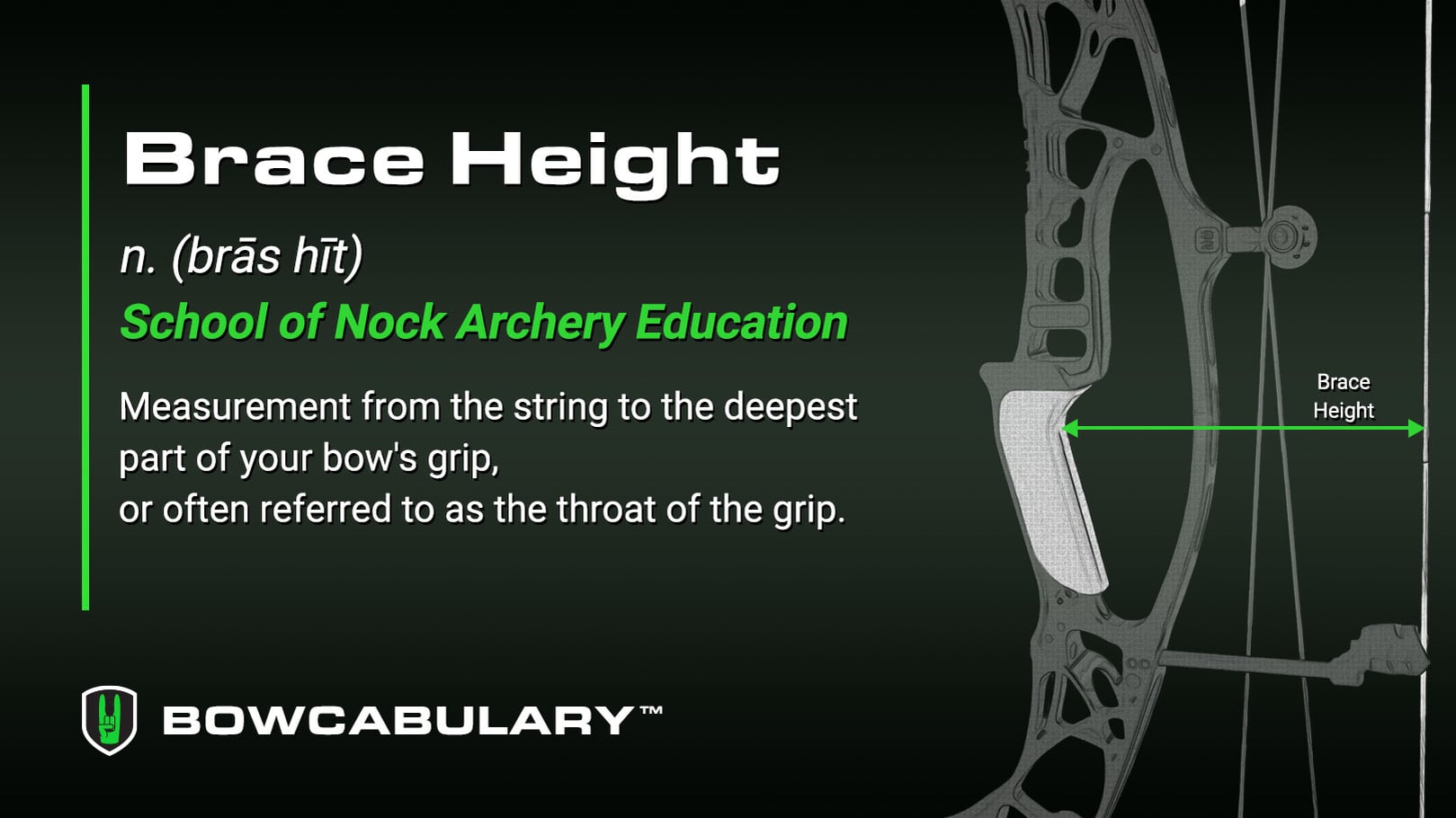
Brace height is the measurement from the string to the deepest part of your bow’s grip, often called the “throat” of the grip. You take this measurement with the bow strung and in a relaxed position.
To measure it, grab a tape measure. Place one end at the deepest part of the grip’s throat and measure straight to the center of the bowstring. That number is your brace height.
It seems simple enough on the surface. But this one measurement affects speed, forgiveness, and how you compare one bow to another.
Why Brace Height Matters
Brace height determines how long an arrow stays on the string during the shot. The shorter the brace height, the longer the arrow gets pushed through the bow at a particular draw length. That extra push time is your power stroke, and it directly adds speed.
As a rule of thumb, one inch of brace height equals about seven to 10 feet per second in arrow speed. That’s a big deal when you’re looking at spec sheets and comparing bows from different manufacturers.
One company might release a bow with a seven-inch brace height. A competitor might release a bow with the same axle-to-axle length, same draw weight, and same arrow weight, but advertise eight more feet per second in speed. That speed difference likely comes from the brace height, not from some superior cam design.
If you want to compare apples to apples, match up the brace height and axle-to-axle length first. When those two specs are the same between two bows and the speeds are still different, then you’re looking at actual performance differences in the cam system or bow design.
Brace Height, Forgiveness, and the Triangle
Brace height doesn’t work in isolation. It teams up with your axle-to-axle length and draw length to create the triangle of the bow at full draw. A shorter brace height, combined with a longer draw length and a shorter axle-to-axle, creates a steeper angle in that triangle.
Think of it like the roof of a house. The steeper the angle, the harder it is to shoot accurately. Why is that? That steep angle pushes your peep sight farther from your eye, reducing sight picture forgiveness.
Shorter-draw-length archers can often get away with a lower brace height and still maintain forgiveness. They aren’t pulling the string back as far, so the triangle angle stays manageable.
My wife, Sharon, shoots the same model bow I do, but her short-draw cam produces a lower brace height than mine because it’s smaller in diameter. That shorter brace height on her smaller cam gives her a bit more speed since the arrow stays on the string longer. But when you combine that with five inches less draw than mine, the forgiveness is still there for her. So this is a perfect example of why a shorter brace height isn’t always related to less forgiveness.
When Your Brace Height Doesn’t Match the Specs
If you’ve measured your brace height and it doesn’t match what the manufacturer advertises, check your limb bolts before you panic.
When you back out your limb bolts to reduce poundage, you relax the limbs. As those limbs move away from the riser, the brace height increases. The advertised brace height on your bow is measured at peak draw weight with the limb bolts fully tightened.
So if you’ve reduced your poundage by backing out the limb bolts, your brace height will read longer than the advertised spec. That’s normal. Factor in your limb bolt position before assuming your bow is out of spec.
Why Strings and Cables Matter
If you have changed your string and cable sets, or have had a set on for a long time, your specs could be altered due to an improper length. As they stretch from heat or break-in, even an eighth of an inch off can affect the bow’s specs. Minimal variations aren’t worth being concerned about, but if your specs are falling short, here’s a tip.
If you need to increase your brace height, twisting the strings and cables up equally can preload the limbs back to factory spec and raise your brace height while lowering your axle length. One other thing to factor in is that bow company specs are based on very specific string and cable diameters as built at the factory. If your replacement sets are narrower or thicker in diameter, they can also slightly alter the specs. Again, minimal variations aren’t worth being concerned with.