

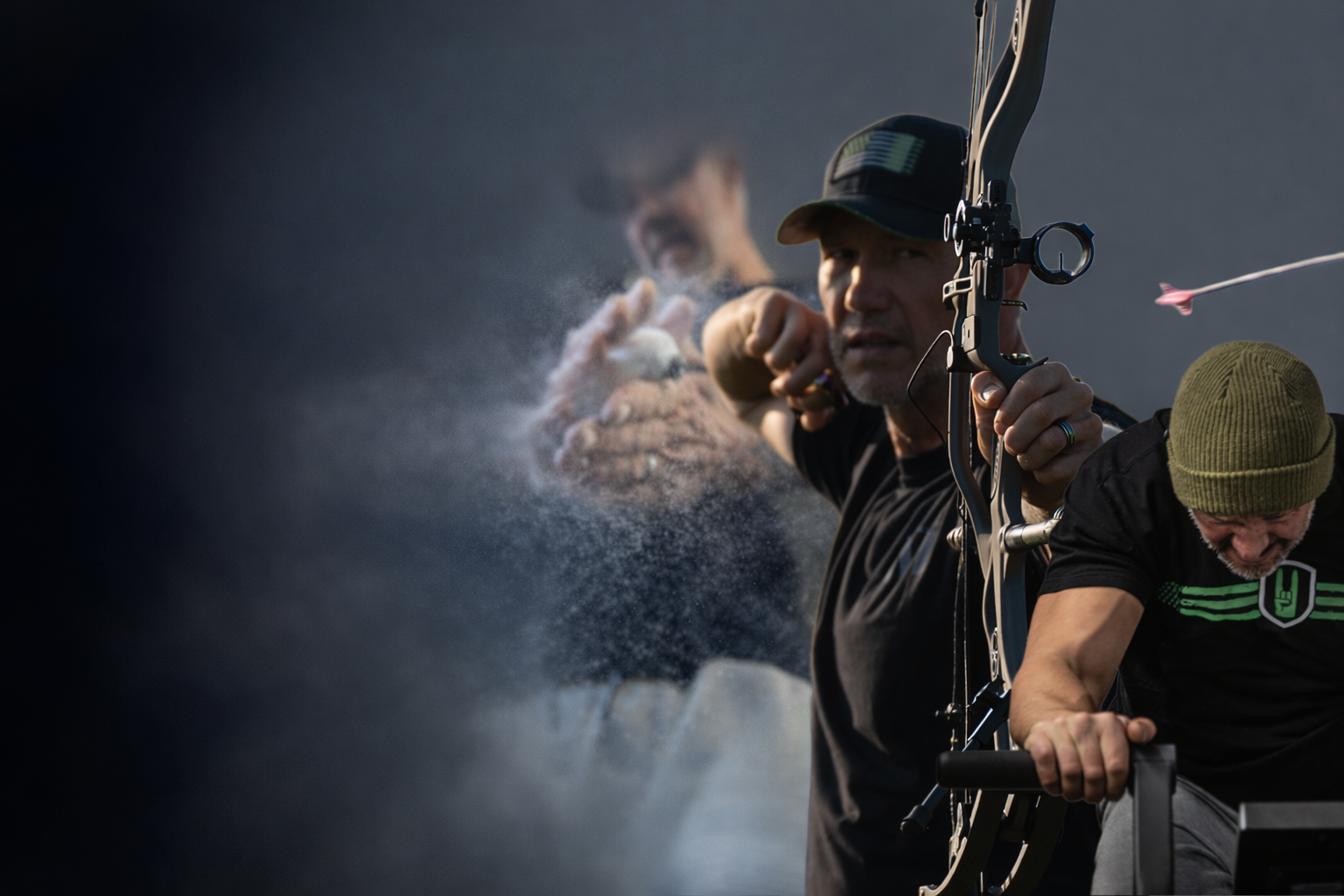
Most archers obsess over equipment upgrades and shooting form, but they overlook the factor that determines whether they’ll actually put in the work: their environment.
After decades of competitive shooting and countless hours of coaching, I’ve learned excellence comes from building a habitat where good habits become inevitable, not from motivation or willpower.
This concept aligns with a point I shared recently: Excellence is determined by your daily habits, not one-off performances. Today, I’ll show you exactly how to create the physical space that makes those habits stick, whether you’re working with a spare corner of your garage or building out a dedicated training area.
Why Your Training Environment Matters More Than You Think
Talent and determination mean nothing if you can’t consistently show up to train.
The biggest barrier between where you are and where you want to be isn’t your equipment or your technique. It’s friction. Every obstacle between you and practice, no matter how small, compounds over time into missed sessions and stalled progress.
My personal training space, which I call my Bowjo, wasn’t created overnight. It took years to build, and it started in the smallest room of my house back when I was at Mathews in Wisconsin.
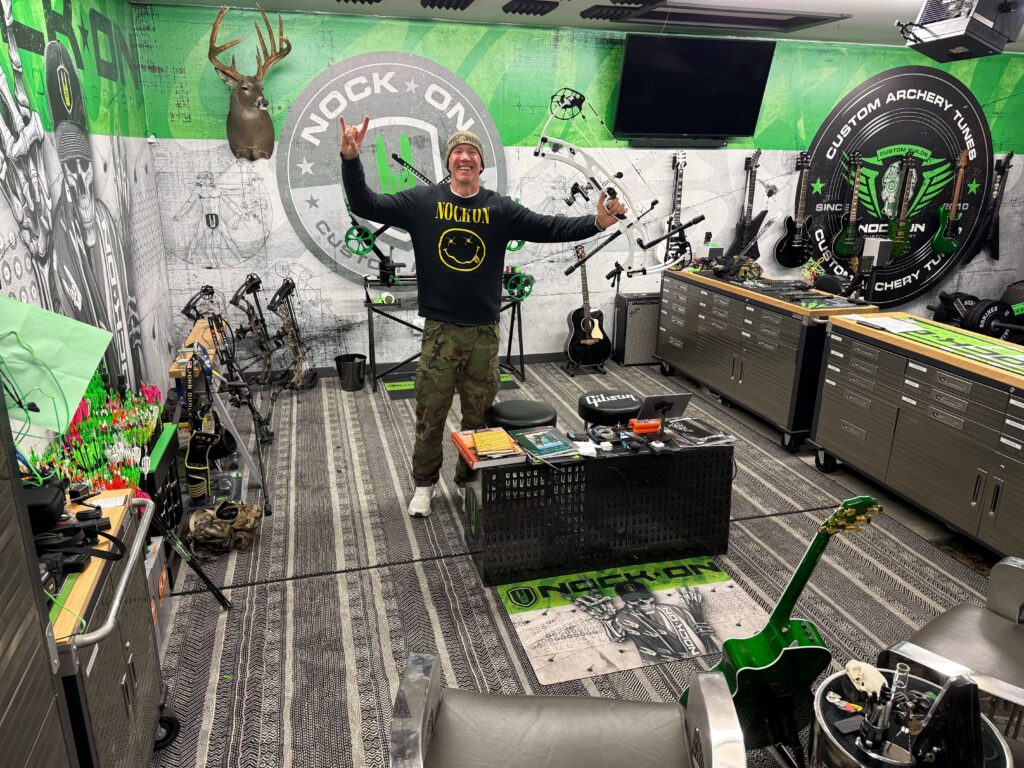
That first space had my deer heads, a bow press, a saw, and barely enough room to turn around. But it was mine, and I dedicated it to one purpose: making archery practice happen without excuses.
When all your gear and training tools exist in one place, training goes from a decision you have to make to a default behavior. You don’t negotiate with yourself about whether today’s the day. You walk in, and the environment tells your brain exactly what to do.
Creating Your Own Training Habitat
You don’t need a massive budget or a dedicated building to make this work. You need intentionality about whatever space you can claim.
Start With What You Actually Need
Strip this down to the basics. For archery training, your habitat needs to support three core functions:
- Equipment work: A surface where you can maintain, tune, and repair your gear. I spend a lot of time at my bench refletching arrows, swapping out a QAD UltraRest HDX, or pressing a bow. Having all of that in one spot means I’m never hunting for tools when I could be working.
- Shot execution practice: Even 10 yards of shooting space delivers massive returns on form development.
- Physical conditioning: Space for the fitness work that supports your shooting.
Don’t let perfect become the enemy of functional. A corner of your garage with a folding table, a block target, and some resistance bands gets you 80% of the benefit. The remaining 20% comes from having those elements accessible and organized.
The 10-Yard Training Principle
Don’t underestimate close-range practice. A lot of my training happens at 10 yards, and I get tremendous value from those sessions.
When you’re dialing in form, building shot count, and getting in the groove with your release, distance is irrelevant. What matters is quality repetitions executed with focus.
Your habitat doesn’t require a 50-yard indoor range. If you’ve got 10 yards and a quality target, you’ve got a training facility. Stop waiting for ideal conditions and start working with what’s available.
Integrating Fitness Into Your Archery Routine
Physical conditioning and archery practice aren’t competing priorities. They’re complementary systems that amplify each other. But sequencing matters, and this is where most archers sabotage themselves.
The Scheduling Framework That Actually Works
Here’s how I structure my training when I’m preparing for competition:
Heavy lifting days: I never shoot serious volume after heavy strength work. Fatigued muscles mean compromised form, which means you’re training bad habits into your shot.
On heavy lifting days, I’ll do minimal archery work: maybe I will work on some arrows, replace a D-loop, and work on serving. That keeps my hands in the archery world without demanding precision from tired muscles.
Heavy shooting days: Tuesday and Wednesday typically become my volume days for bow work. If the best weather window is in the morning, I shoot then. If evening light is better, I adjust.
On these days, any gym work stays in the cardio lane, nothing that taxes the muscles I need for clean shot execution. I’ll grab a Jocko GO before an early session to stay locked in without crashing halfway through a training block.
Competition/Hunting weeks: When I was competing heavily, I never touched weights after Friday. The weekend belonged to performance, not preparation. If I’m on a hunt, the same rule applies.
I’d do cardio, mobility work, and maybe some bodyweight movements if I felt tight. This is especially true on a hunt. If you have made it habitual to stretch and get loose before you go out, you will perform better. But the training stimulus had to be in the bank before I competed.
The principle here is simple: Fit the work to the window, and never let one training modality undermine the other.
The Chalkboard System
I put chalkboards everywhere I spend time. My employees know it, my family knows it. When an idea hits or a training plan needs mapping, it goes on the board immediately. It lets me see it in my personal spaces and have additional time to reflect on ideas. Writing this on a phone is convenient but isn’t always visual if the app is closed.
Get the plan out of your head and into a format that creates accountability. At the start of each week, I map out which days are lifting-heavy, which are shooting-heavy, and how they fit together.
When Thursday morning arrives and I’m not sure what that day’s priority is, I don’t have to think. I look at the board.
Making Your Habitat Work for Your Life
Apply the underlying principles to your situation rather than trying to replicate my setup. Here’s how to start:
Claim your space. Pick somewhere you can dedicate to archery: a section of garage, a basement corner, a spare bedroom, etc. The specific location matters less than the commitment to make that space serve your training.
Eliminate friction. Keep all your gear within reach when you walk in. Bow on a rack, arrows accessible, target ready to absorb shots. The more steps between “I want to practice” and actually drawing your bow, the more opportunities exist for life to intervene.
Schedule the work. Don’t wait for motivation to strike. Put your training blocks on a calendar or chalkboard. Decide in advance when you’ll shoot heavy, when you’ll lift, and when you’ll recover.
Let the schedule do the work that willpower can’t sustain.
Start small and expand. My Bowjo took years to reach its current state. Yours will too, and that’s fine. Begin with the minimum viable habitat and improve it over time as resources allow.
Building Habits That Last
Excellence isn’t a one-time achievement you possess forever. You earn it daily through consistent action. The space you create, your archery habitat, is the infrastructure that makes consistency possible.
When I walk into my Bowjo, I’m not deciding whether to train. The environment removes that choice. The bows are there. The target is there. The weights are there.
My chalkboard tells me exactly what today’s session looks like. All that remains is execution.
Build your habitat. Create your schedule. Remove the friction between intention and action.
That’s how a single act of excellence becomes a lifetime of it.